Project Overview
A closer look at this project
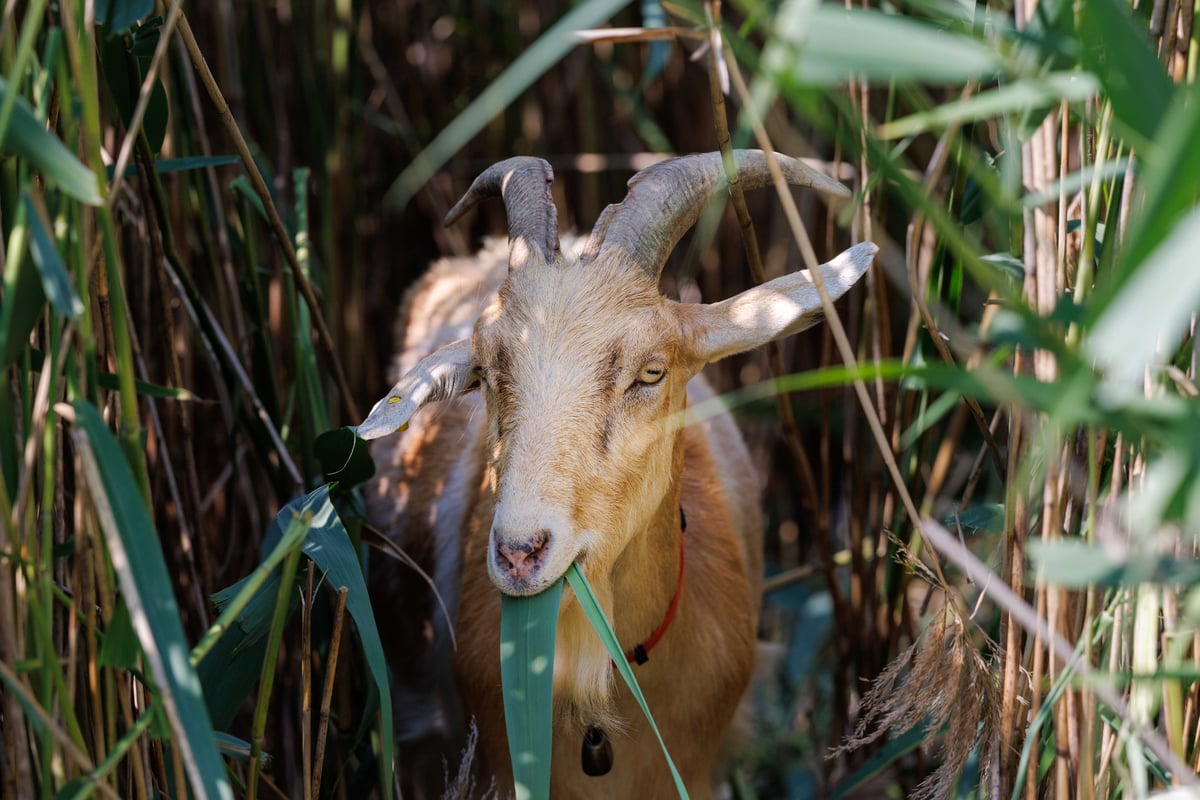
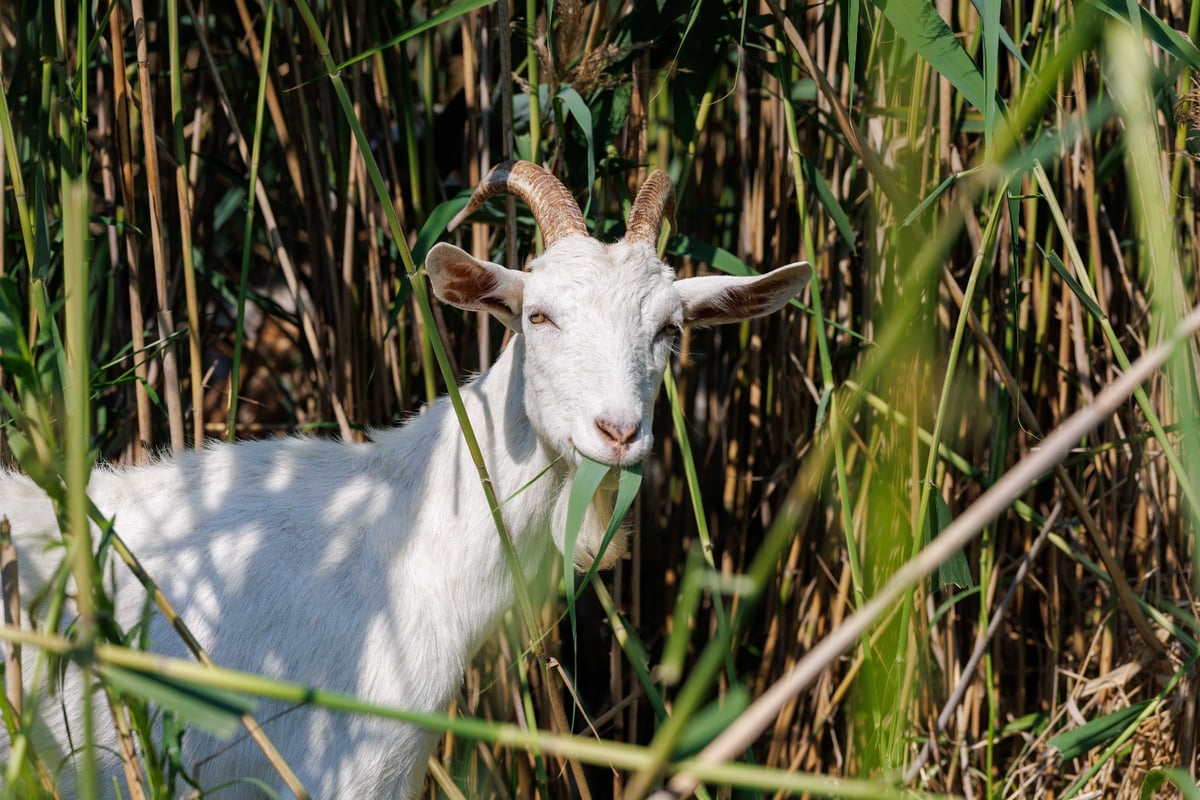
Dense phragmites created a difficult vegetation-management challenge within a municipal natural area. The Eco-Herd entered the dense growth and browsed accessible leaves and stems, reducing standing vegetation and placing pressure on new growth without chemical herbicides.
The Challenge
A tall, dense phragmites stand limited sightlines and access, made conventional maintenance difficult, and continued to spread into surrounding habitat each season.
- Tall, dense phragmites limiting sightlines and access
- Wet and uneven ground
- Surrounding native vegetation to be protected
- Need for a repeatable, herbicide-free approach
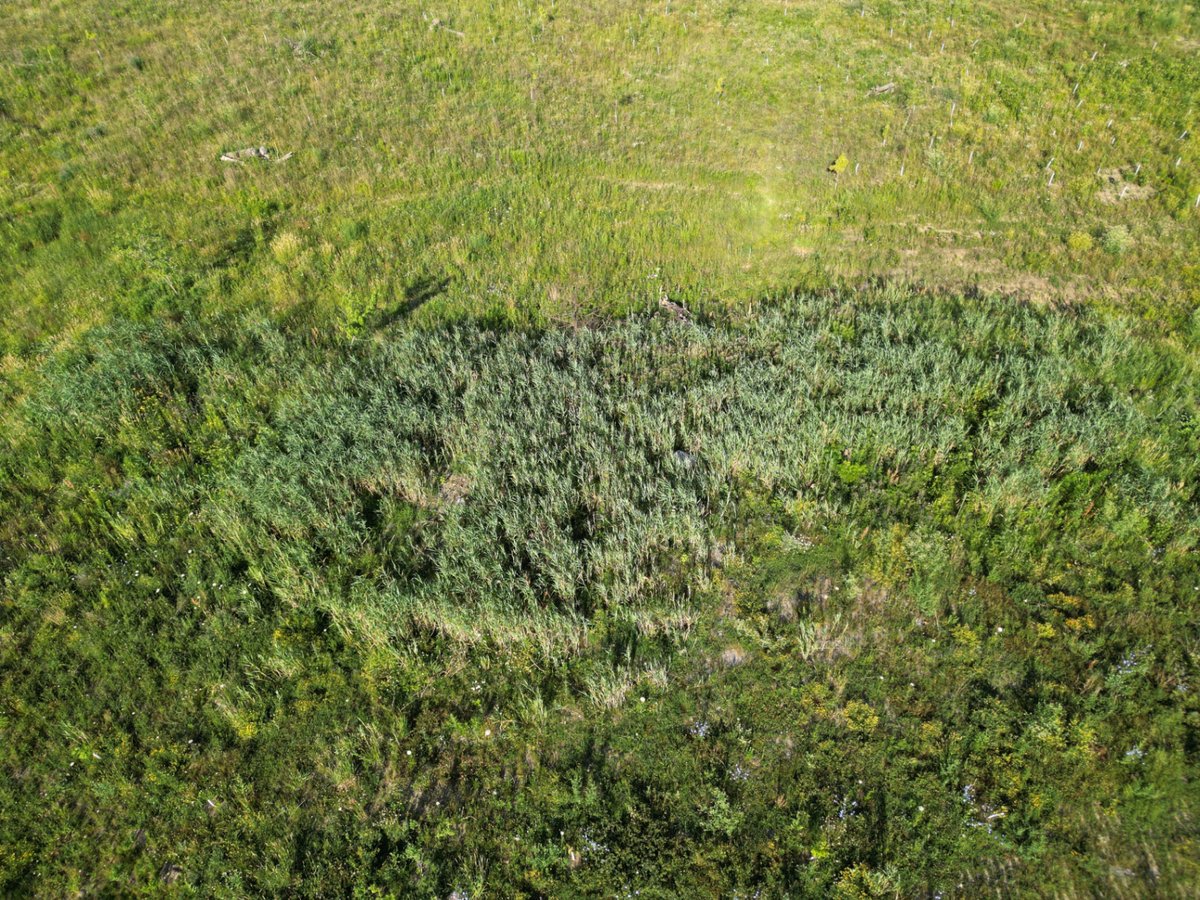
The Grazing Approach
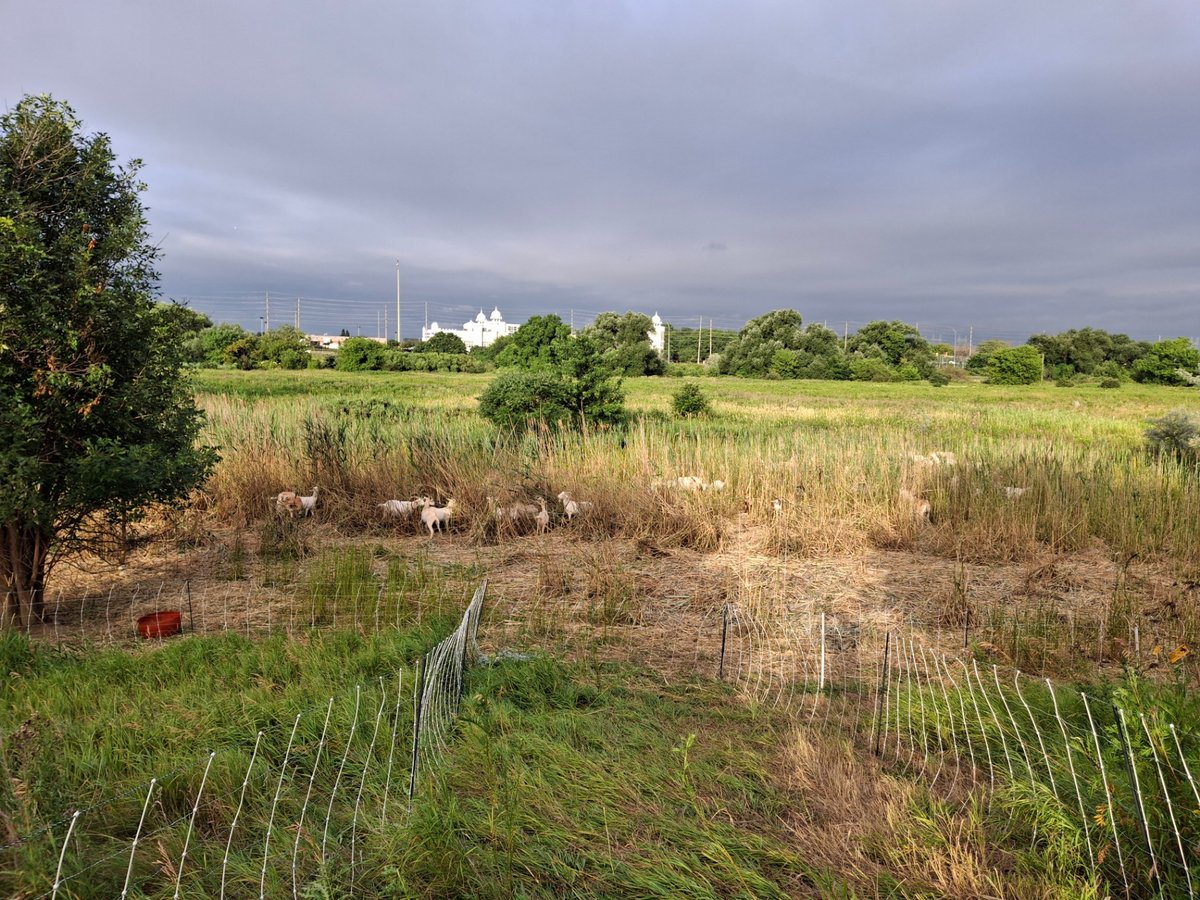
The Eco-Herd was moved through carefully sized fenced grazing areas, grazing phragmites shoots at key growth stages to weaken the stand while the native plants around the perimeter were left intact.
- Fenced grazing areas sized to concentrate grazing pressure
- Grazing timed to key phragmites growth stages
- Perimeter native vegetation excluded from grazing
- Progress photographed through the season
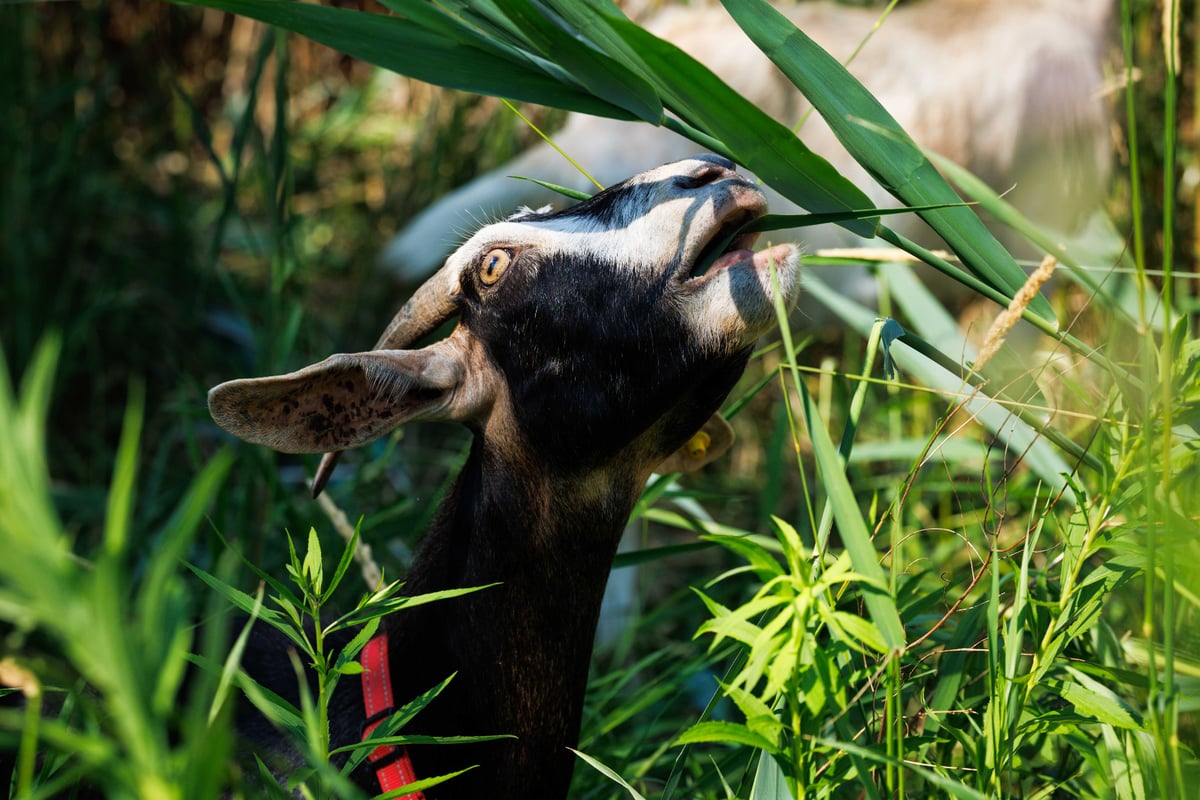
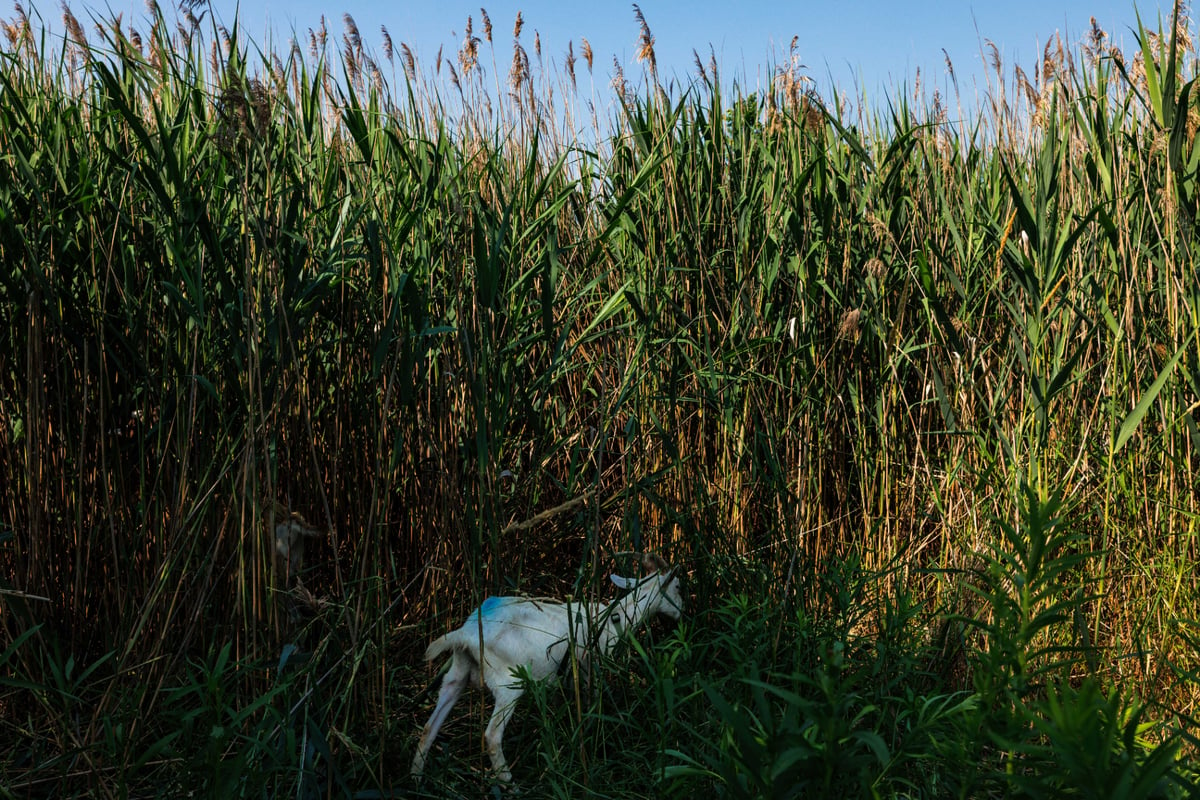
Working Inside Dense Reeds
Phragmites grows tall enough to close in over the herd, so the goats work from the inside out. They push into the stand along established lanes, browse the accessible leaves and stems around them, and open up small clearings that let the next pass reach further into the reeds. Handlers track the herd's position throughout, keeping the animals comfortable and the grazing pressure where it is needed most.
Before and After
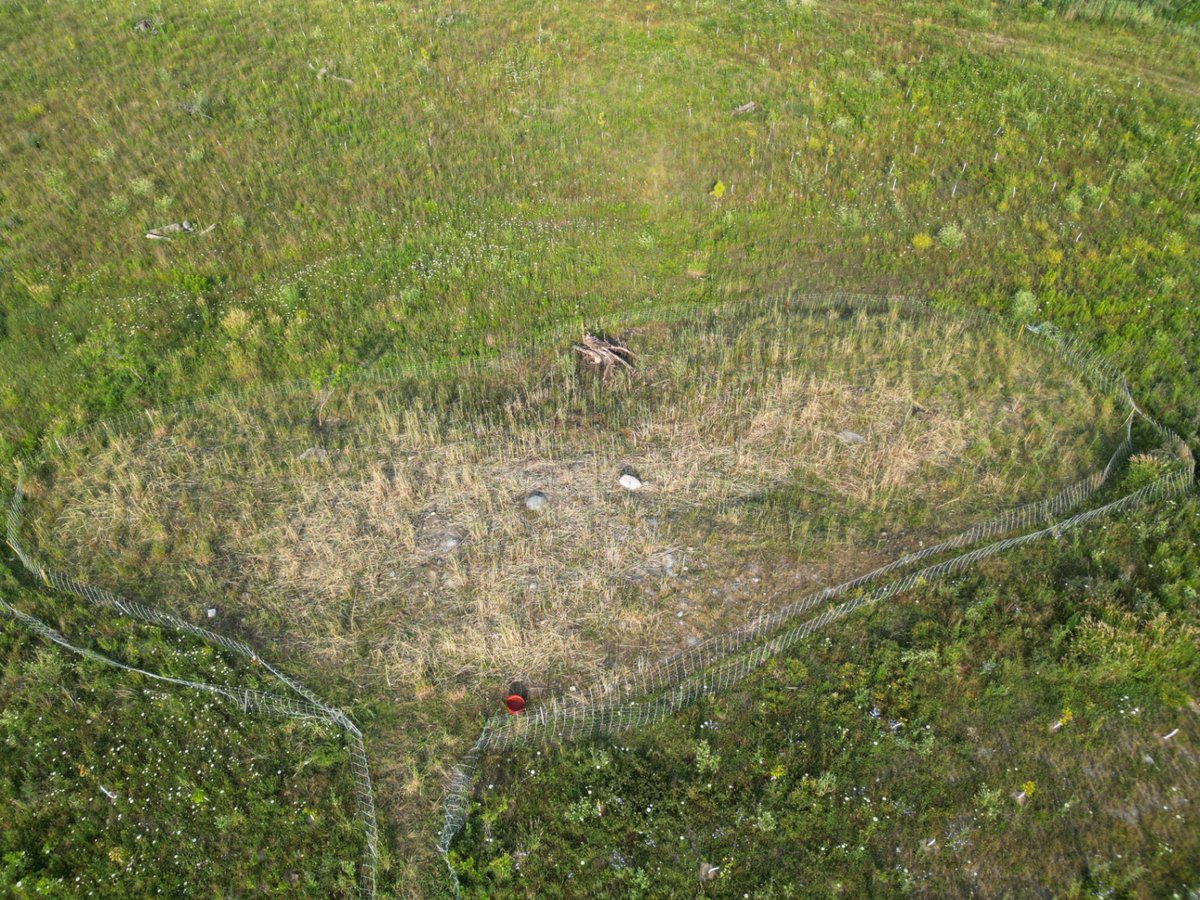
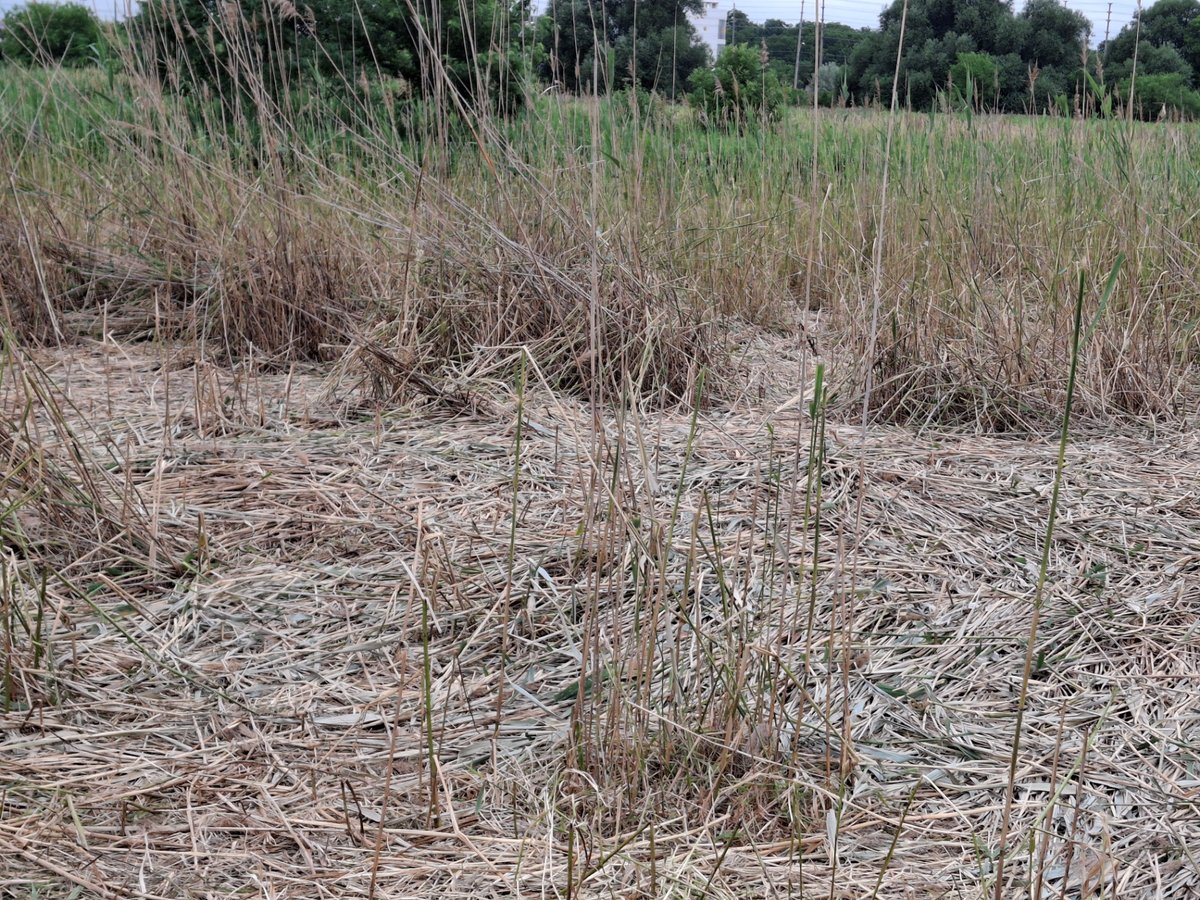
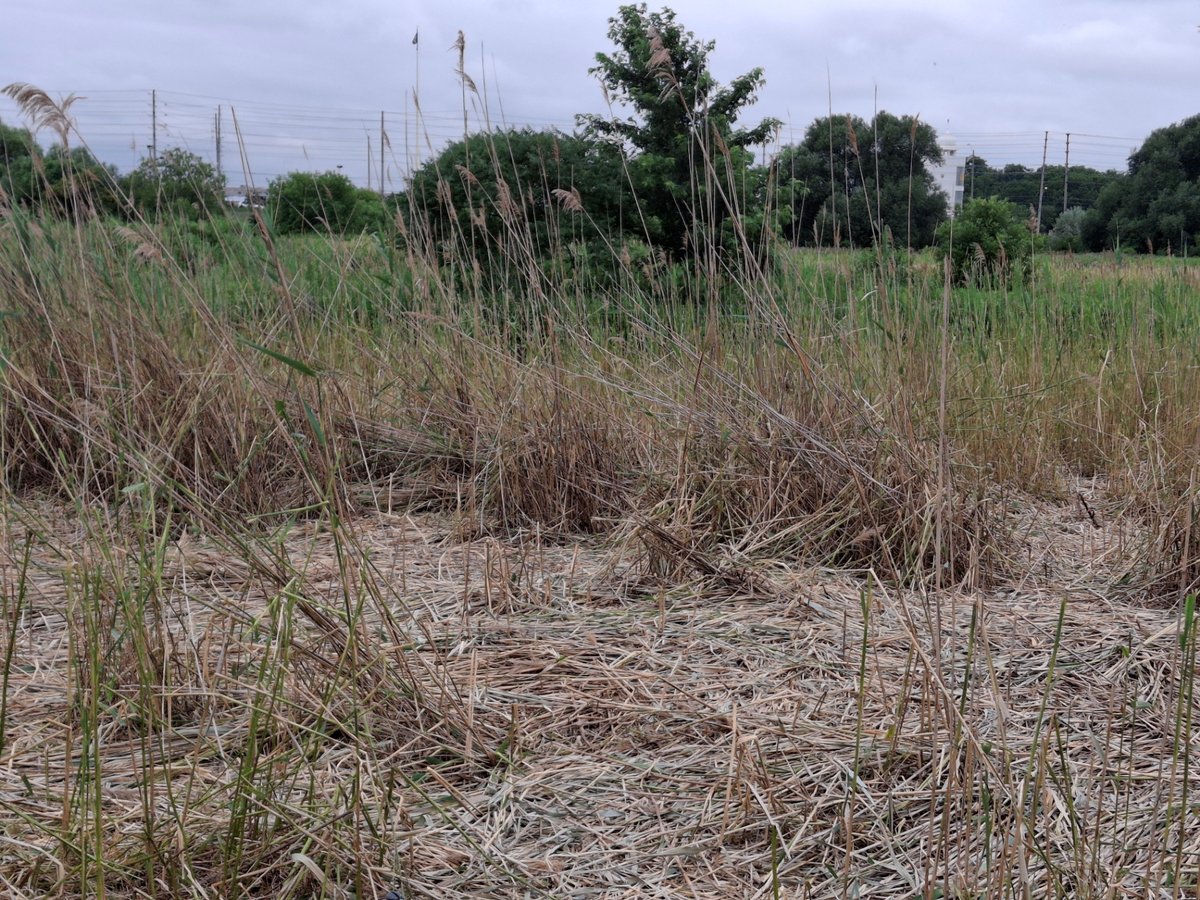
The Eco-Herd browsed accessible phragmites leaves and stems, creating a visible reduction in standing vegetation within the managed area.
Results
Standing phragmites biomass was visibly reduced inside the managed area, improving access for future restoration crews and providing a low-impact starting point for long-term management.
Reduced phragmites biomass without herbicides
Minimal soil disturbance on wet ground
Improved access for follow-up restoration work
Documented baseline for future grazing seasons
Monitoring and Documentation
Conditions inside the managed area were photographed through the season to record how the stand responded to grazing and how quickly regrowth returned. That record gives the City a clear baseline for planning follow-up passes in future seasons.
Project Gallery