
Infrastructure Case Study
Highway 7/8 Eastbound at Courtland Avenue / Boniface Avenue
Prescribed Grazing for Highway Vegetation Management
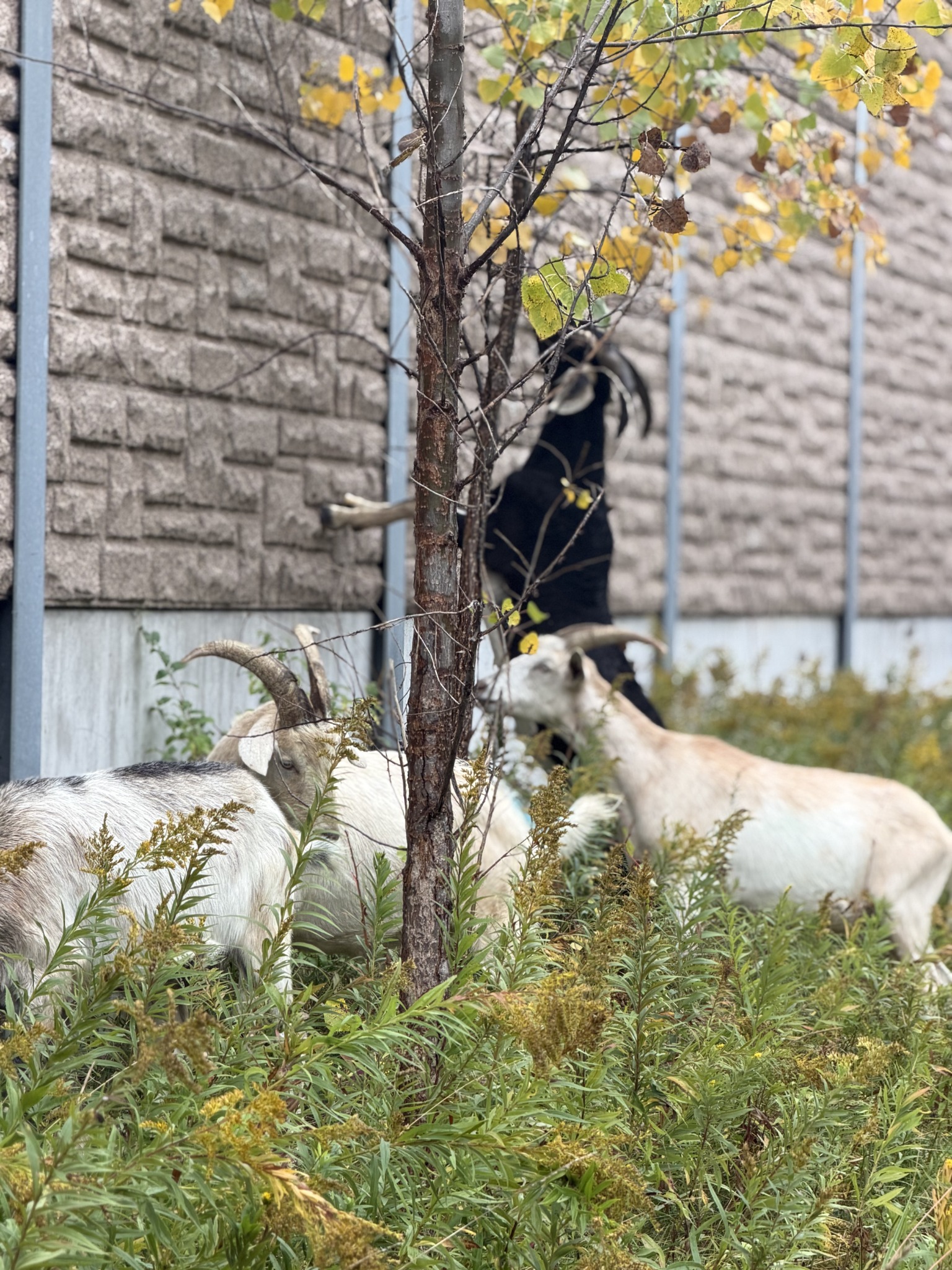
Goats in the City deployed its Eco-Herd along the Highway 7/8 eastbound corridor at Courtland Avenue and Boniface Avenue in Kitchener to manage dense vegetation around highway infrastructure and the sound wall corridor.
Using managed grazing areas, active Eco-Shepherd oversight and controlled herd movement, the goats worked through tall grasses, herbaceous vegetation and woody growth within a compact and constrained transportation corridor.
2026 | Kitchener, Ontario | MTO / EMCON
The Challenge
The Highway 7/8 eastbound site presented a different vegetation-management challenge from an open field.
The revised treatment area was approximately 0.5 hectares and extended along the sound wall corridor near Courtland Avenue and Boniface Avenue. Dense grasses, herbaceous vegetation and woody growth had established within a confined area influenced by slope, trees, fencing and surrounding highway infrastructure.
The revised treatment boundary ended at the first wall section, concentrating the work within a defined corridor.
Before Grazing
Before the herd arrived, the site contained dense vegetation at several heights, including tall grasses, woody brush and vegetation growing beneath and around established trees.
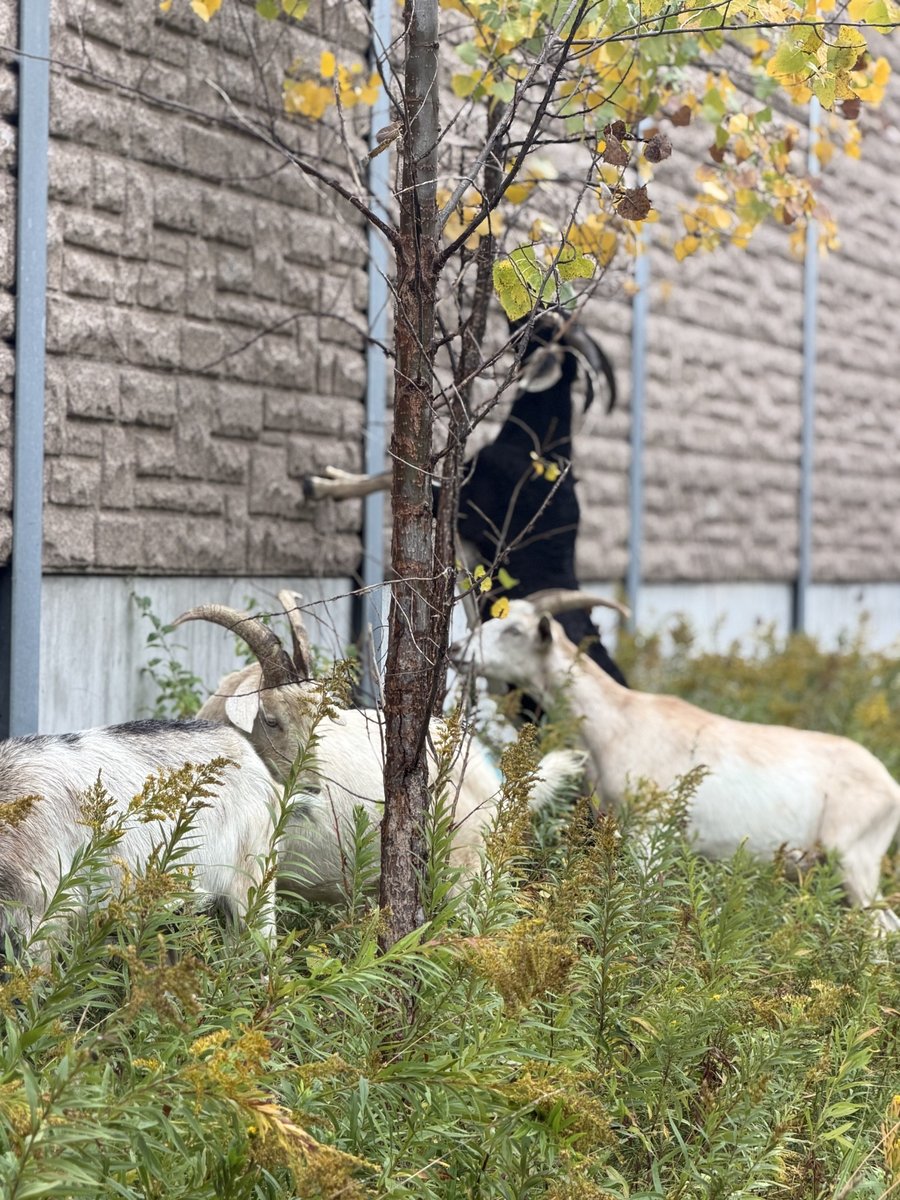
The narrow sound wall setting created conditions where goats could use their natural browsing behaviour to work through vegetation that was difficult to address as a simple mowing operation.
Before & After
The Courtland / Boniface Sound Wall Corridor
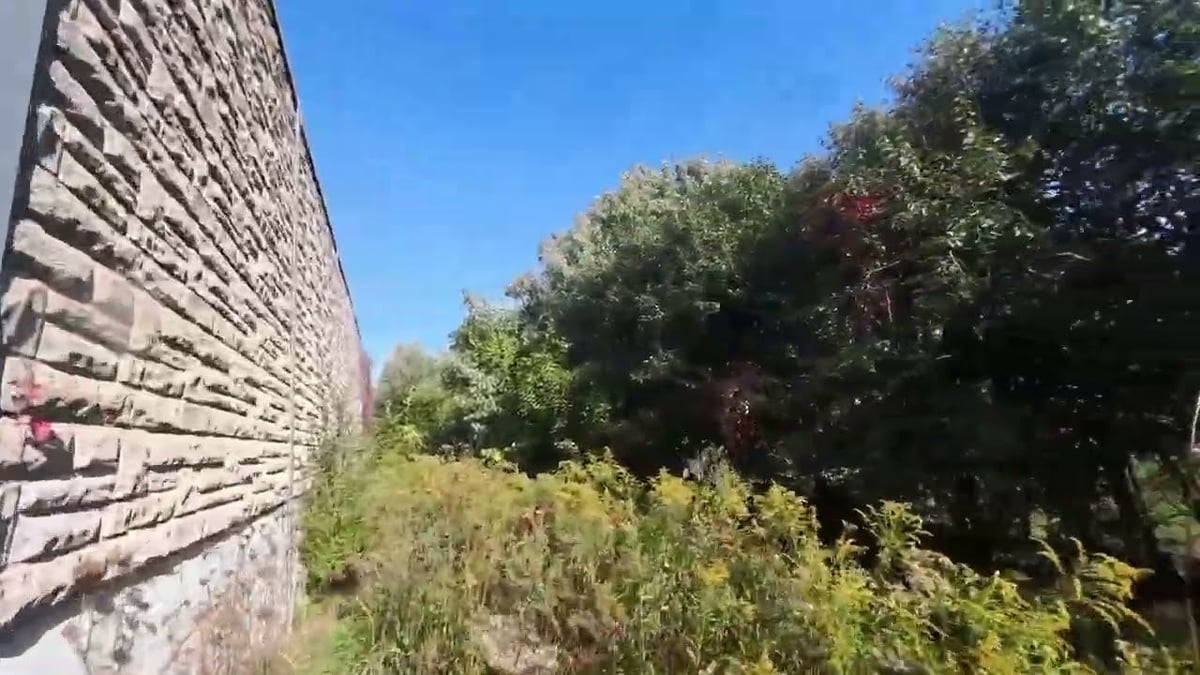 Before Grazing
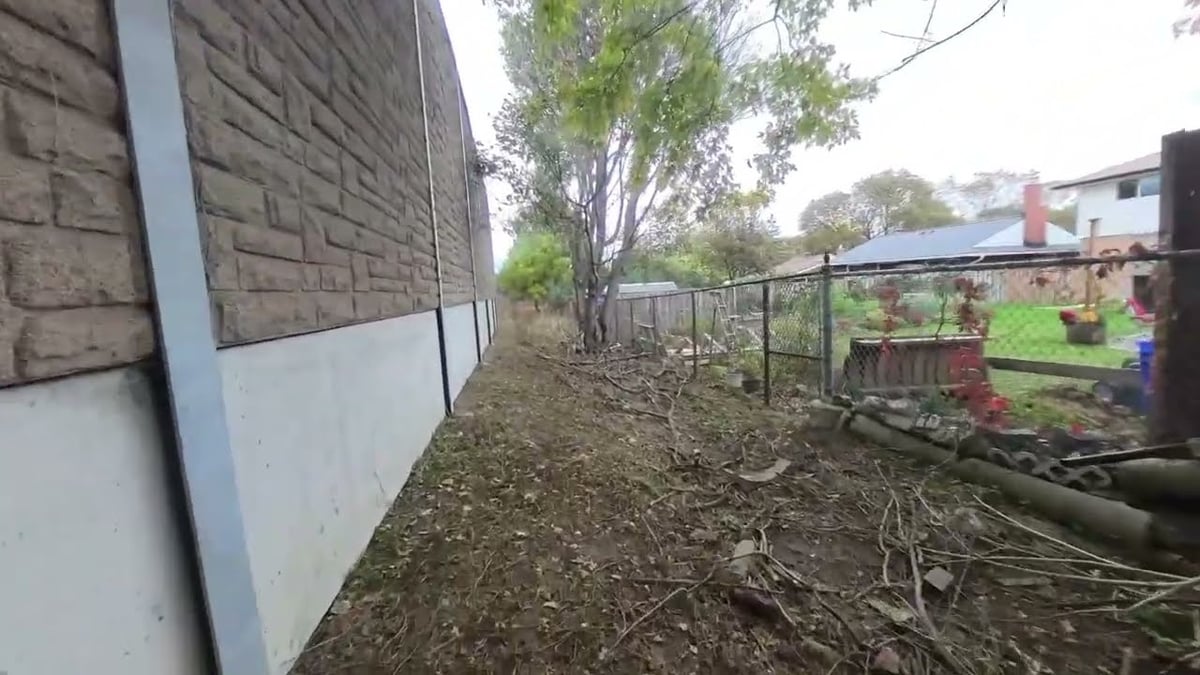 After Grazing
Watch the Transformation
Photographs capture individual moments, but the before-and-after videos provide a broader view of site conditions and the change achieved through prescribed grazing.
Before Prescribed Grazing
After Prescribed Grazing
How the Herd Worked
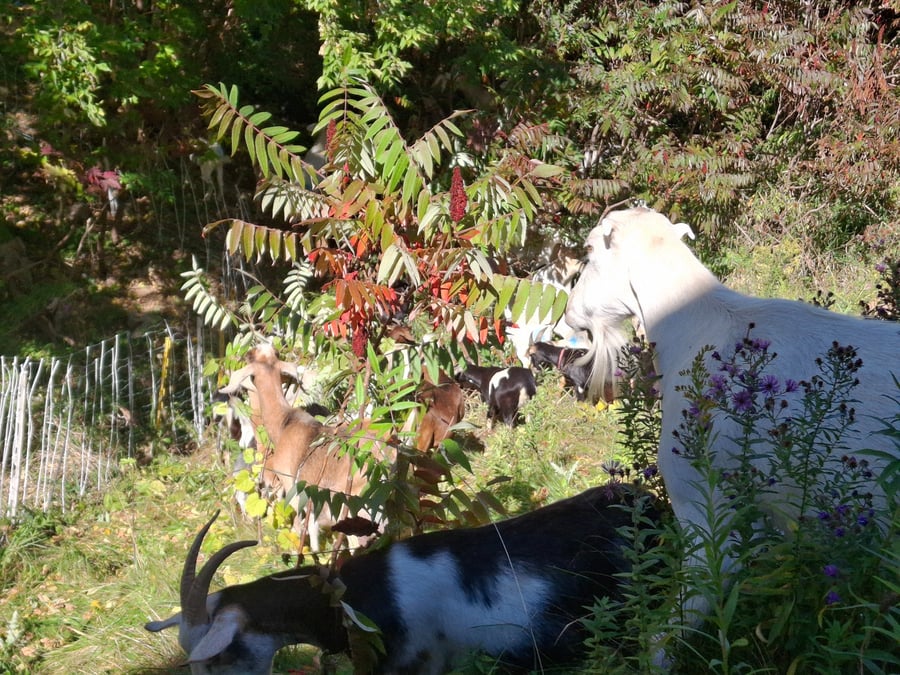
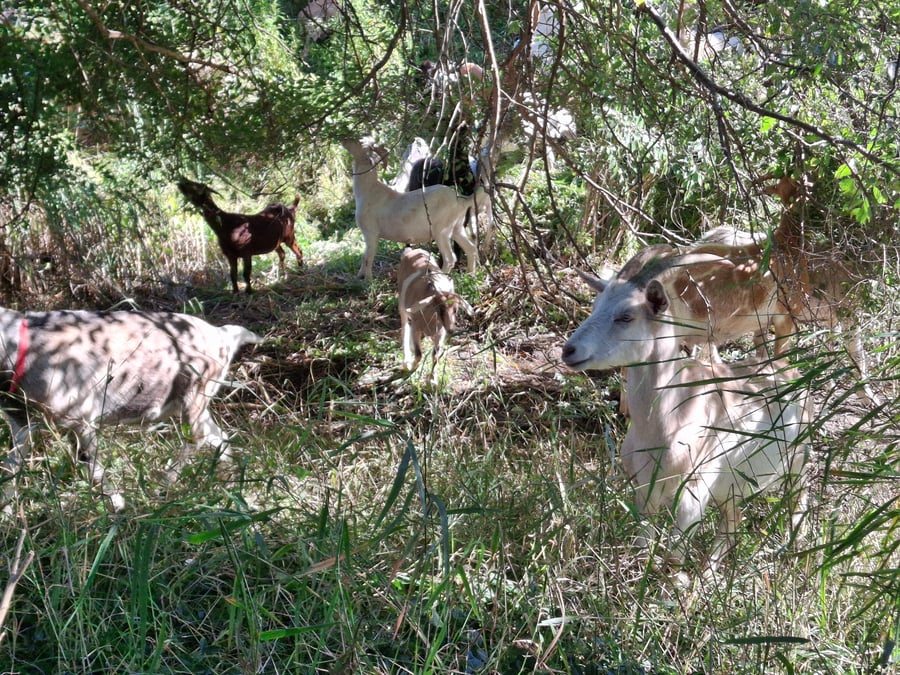
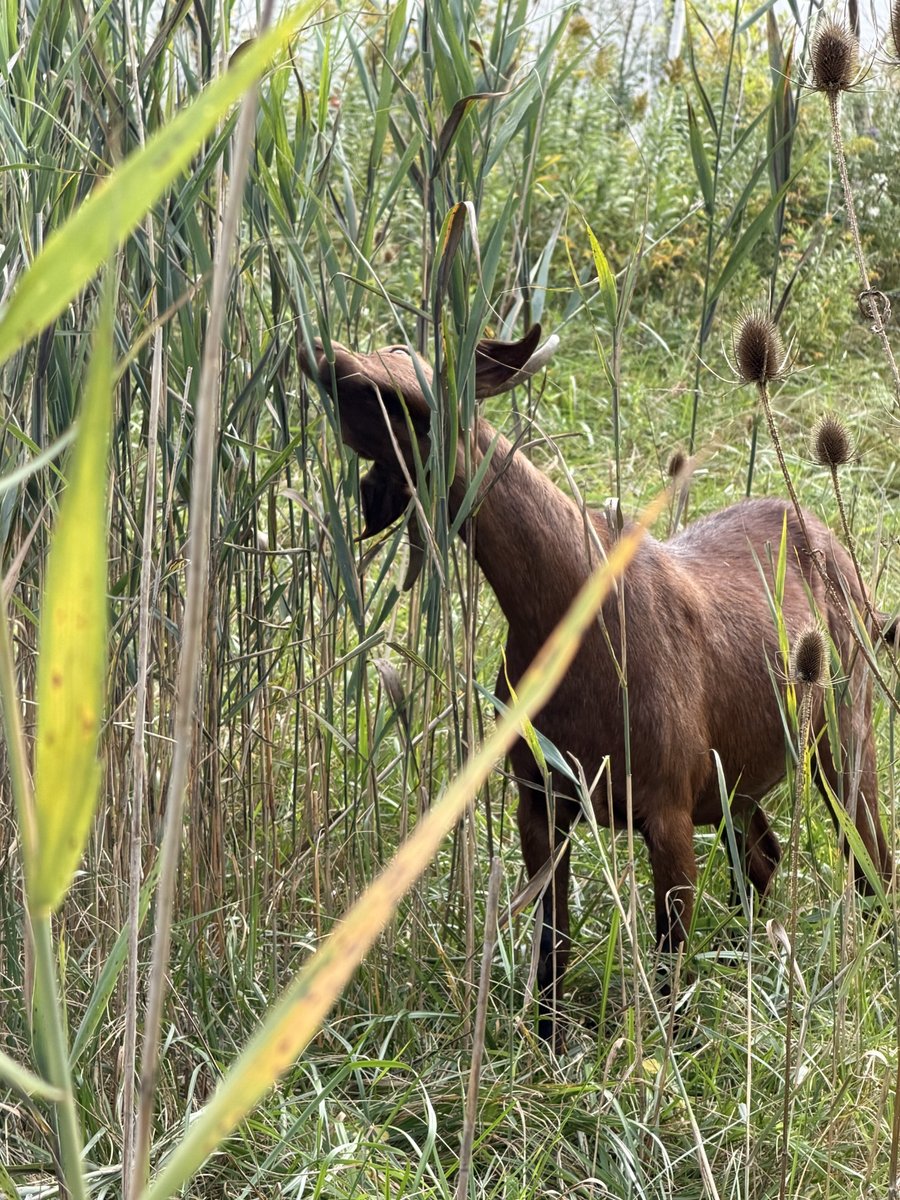
The goats browsed vegetation at several heights rather than simply grazing grass at ground level.
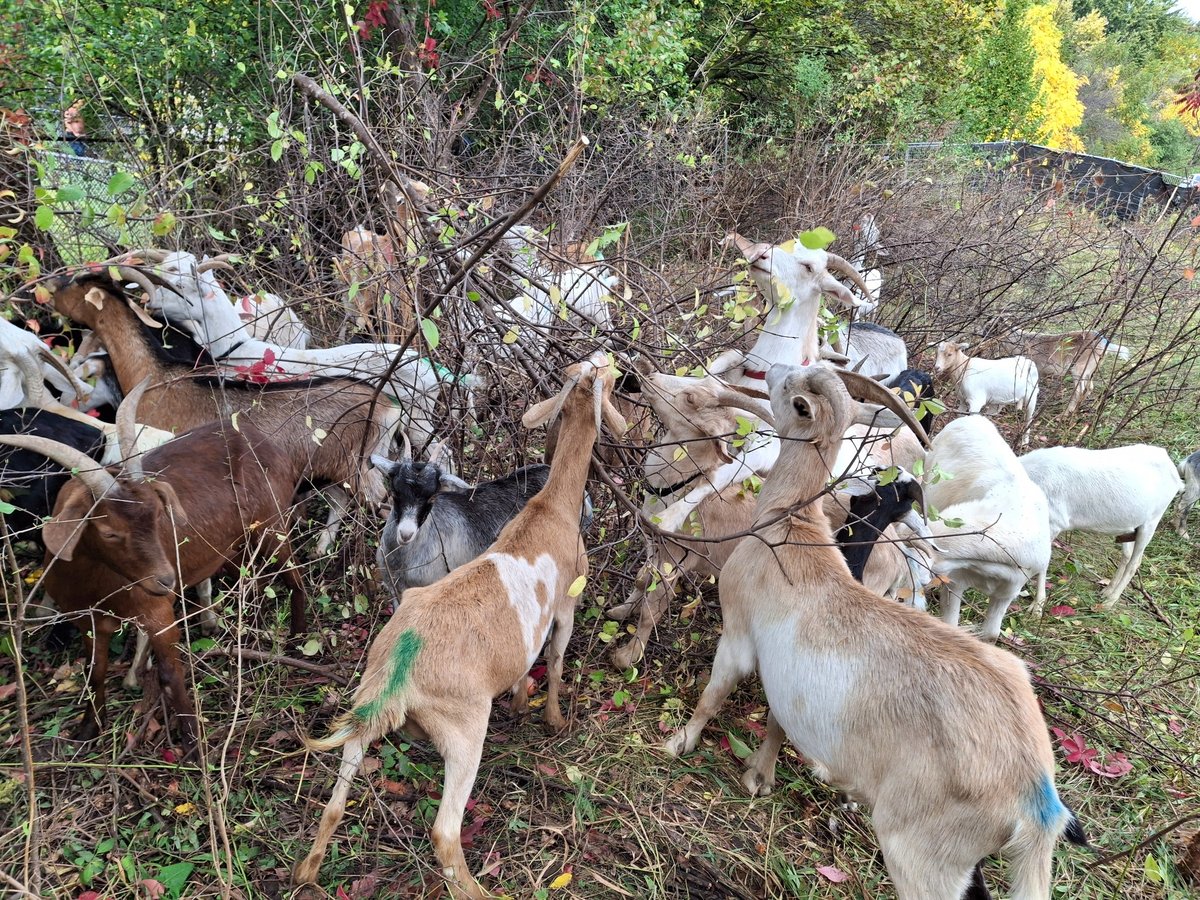
Throughout the treatment, the herd worked into dense brush, browsed leaves and accessible woody growth, moved beneath established trees and worked through taller vegetation along the corridor.
This browsing behaviour is one of the advantages of goats on infrastructure sites where vegetation extends beyond a simple grass layer.
Managed as a Herd
Prescribed grazing is not simply releasing goats onto a property.
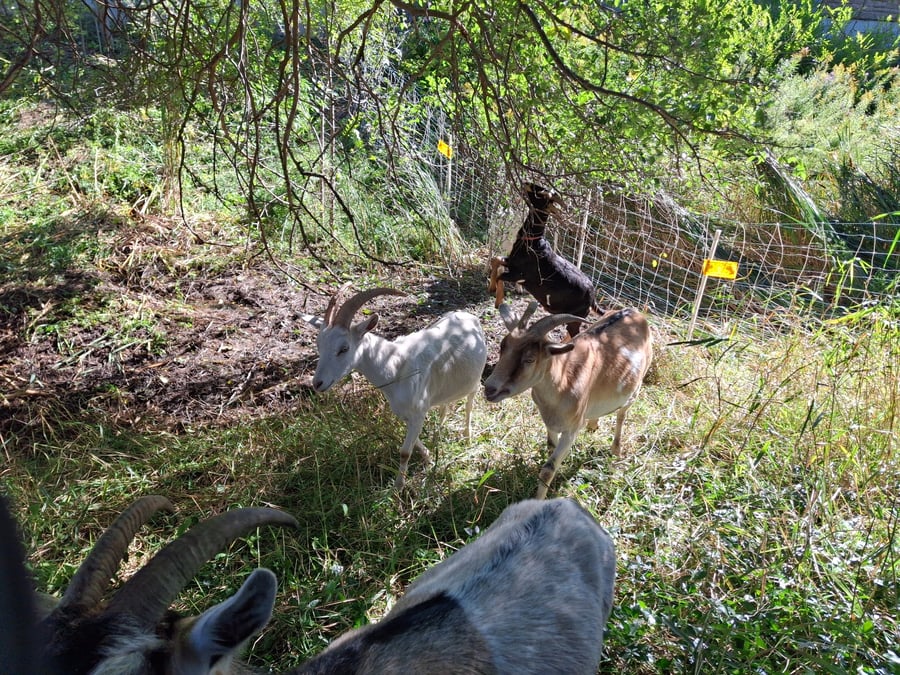
The herd was managed within defined treatment areas using internal electrified livestock mesh as the primary containment system, regular monitoring and active Eco-Shepherd oversight.
For the revised Location 2 plan, temporary construction fencing was concentrated at the end of the treatment corridor as secondary containment, with an approximately 60-linear-foot boundary identified in the revised site plan.
Grazing pressure and herd movement were adjusted according to vegetation conditions and progress on site.
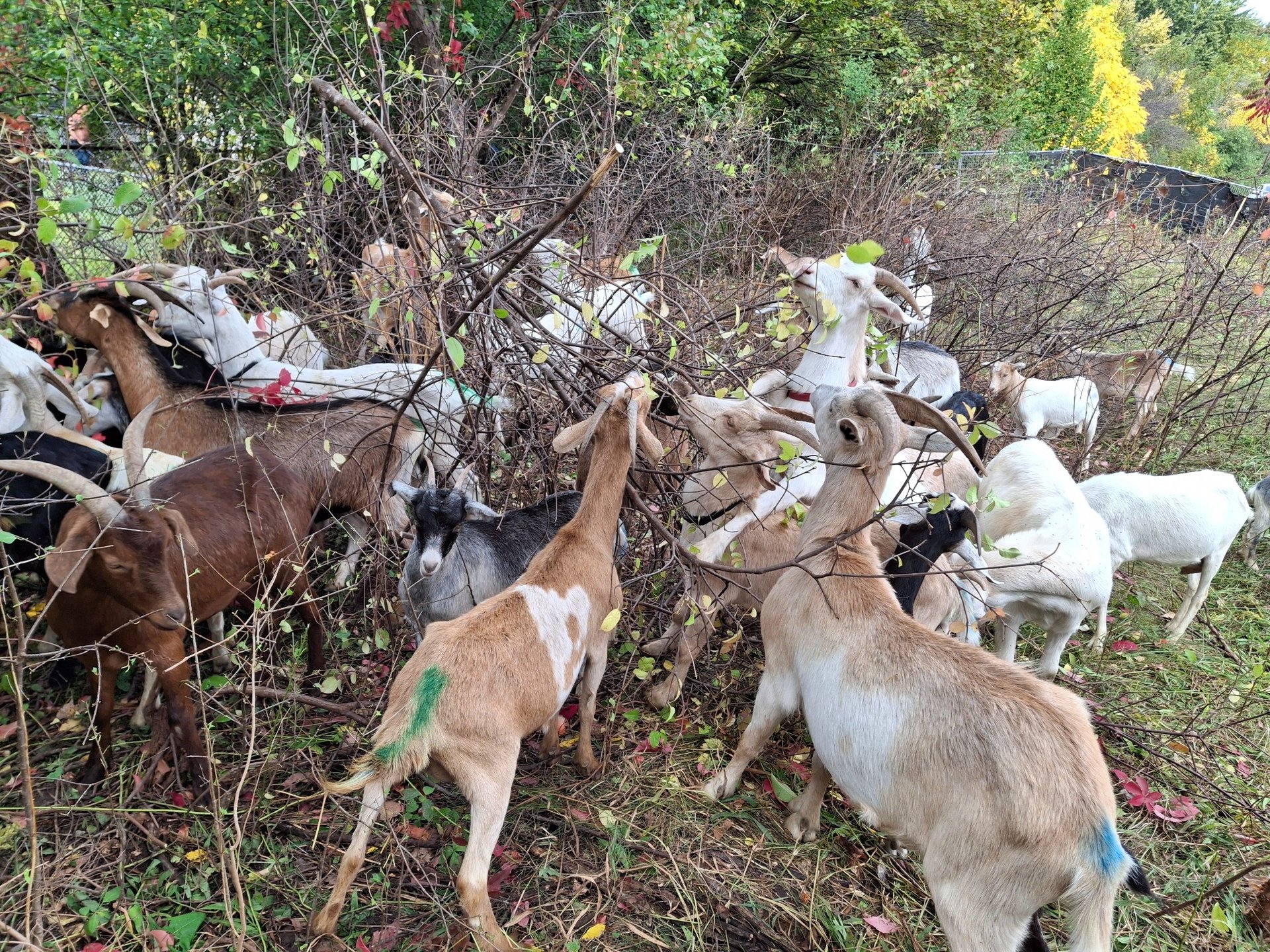
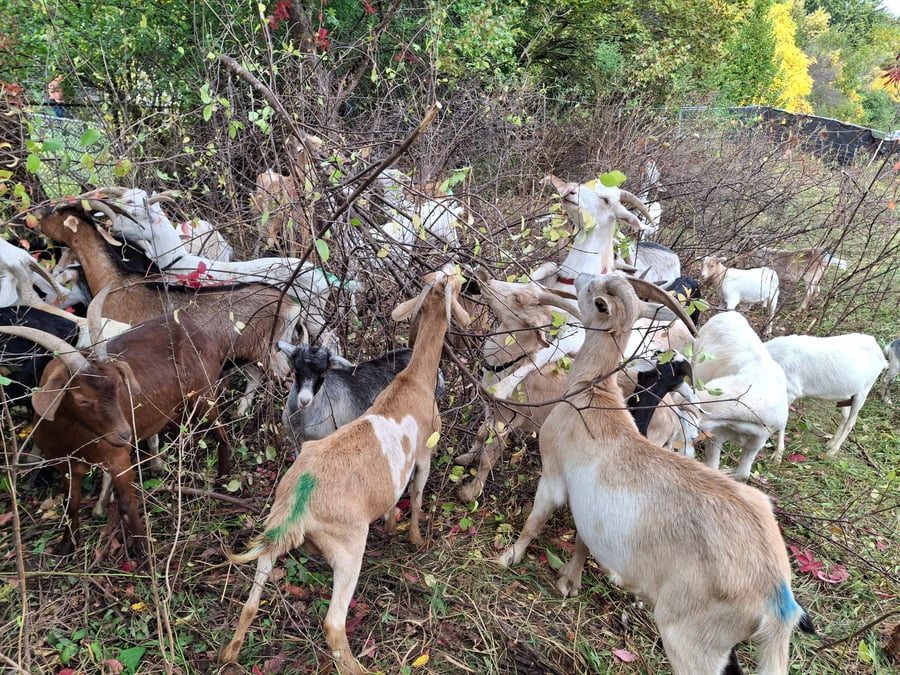
Working Through Dense Vegetation
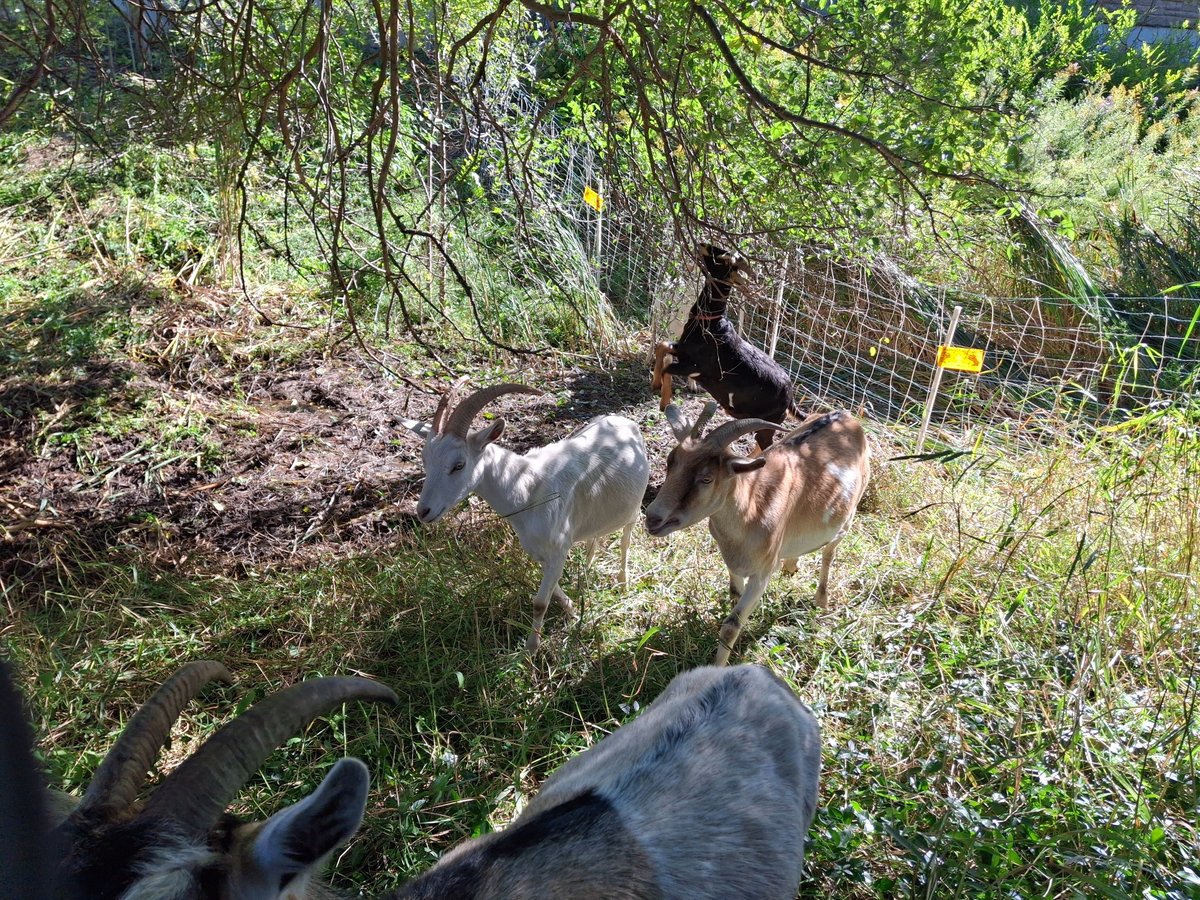
One of the strengths of prescribed grazing is the herd's ability to work collectively through complex vegetation.
At the Courtland Avenue / Boniface Avenue site, goats moved directly into woody and tangled growth, browsing leaves and accessible stems while progressively opening the treatment area.
The Result
By the end of the grazing treatment, much of the standing vegetation had been reduced and the corridor had become considerably more open.
The goats worked through dense grasses, herbaceous growth and woody vegetation within the constrained sound wall setting, demonstrating how prescribed grazing can be adapted to smaller transportation infrastructure sites.
The objective was not to create a manicured lawn. The treatment was designed to reduce biomass, suppress targeted growth and change the structure of the vegetation through controlled browsing.
Project Gallery
Could Prescribed Grazing Work on Your Site?
Goats in the City provides managed prescribed grazing for municipalities, conservation organizations, infrastructure operators and private landowners across Ontario.