
Infrastructure Case Study
MTO Highway 7/8 Kitchener
Prescribed Grazing for Highway Vegetation Management
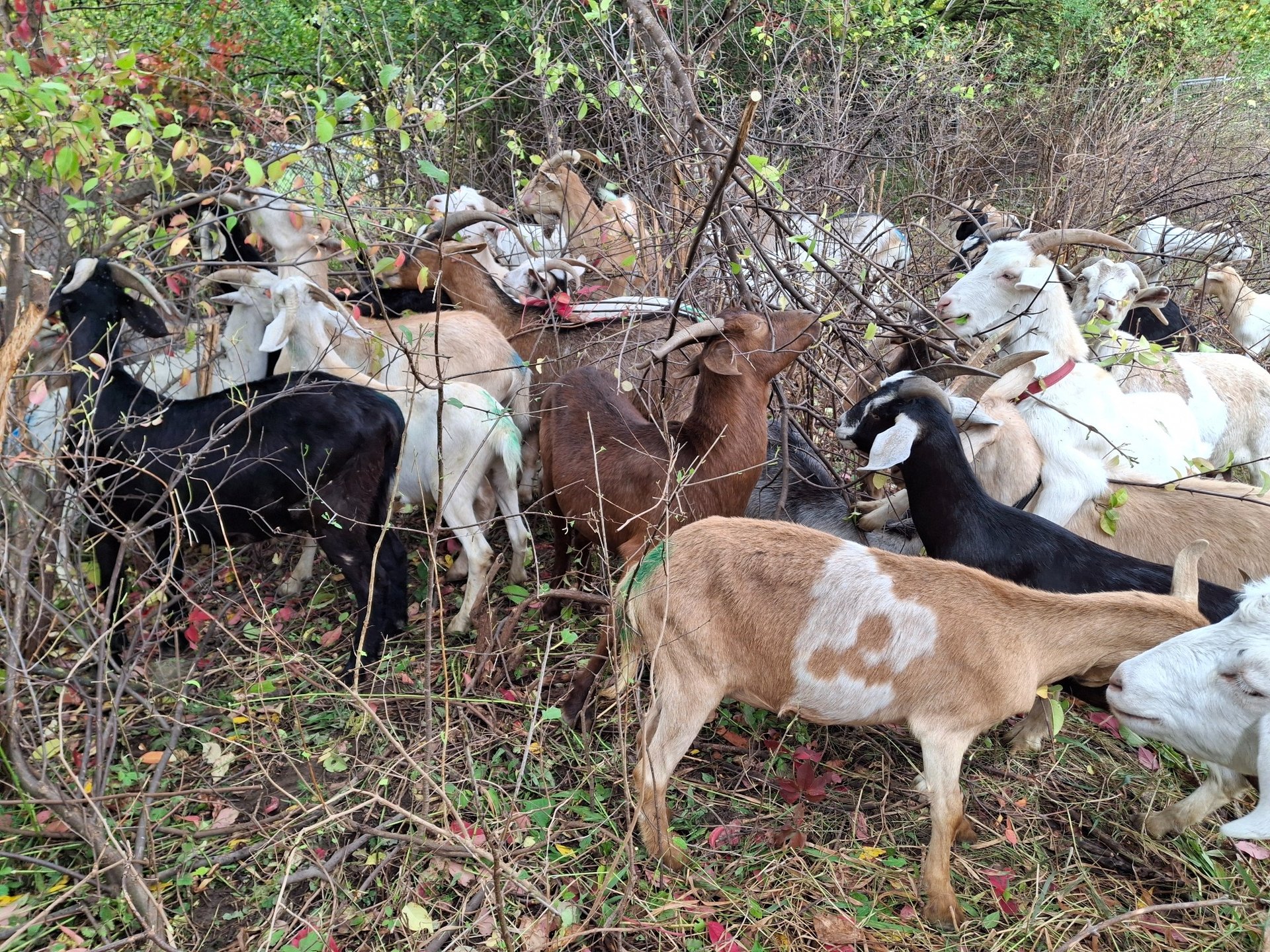
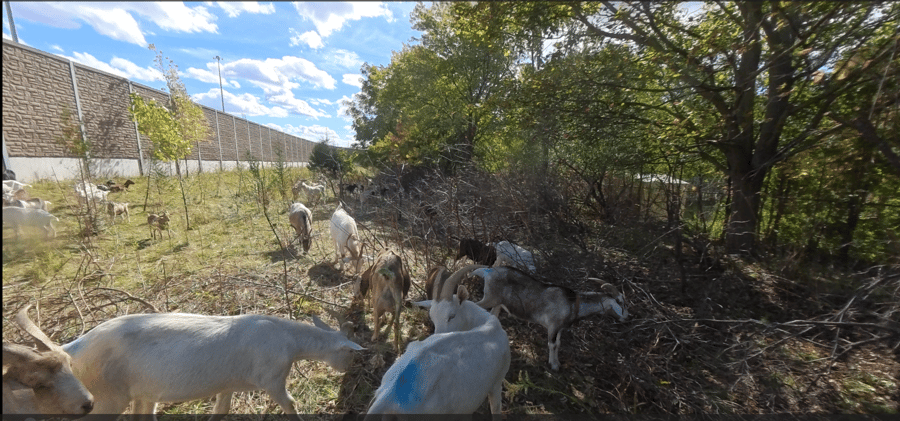
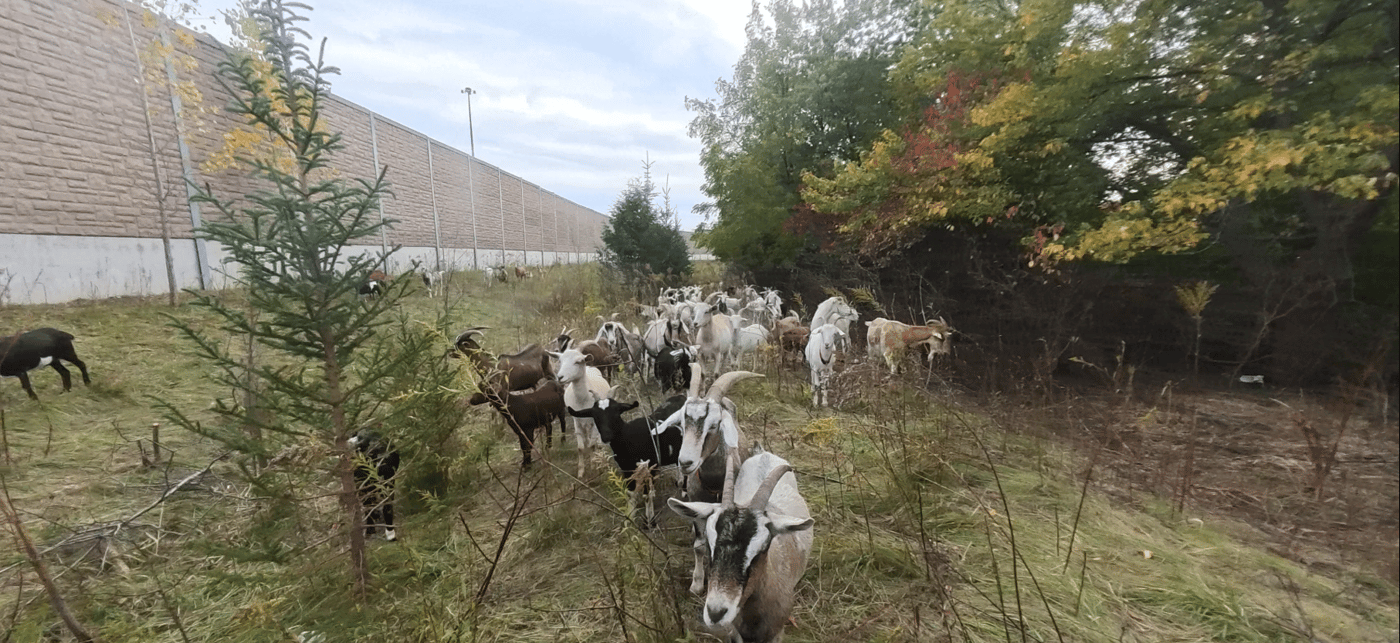
Goats in the City deployed its Eco-Herd along the Highway 7/8 corridor in Kitchener to manage dense vegetation around highway infrastructure and a sound wall.
Using managed grazing areas, active Eco-Shepherd oversight and controlled herd movement, the goats worked through tall grasses, herbaceous growth and woody vegetation within the unique constraints of a transportation corridor.
2026 | Kitchener, Ontario | MTO / EMCON
The Challenge
Vegetation along highway infrastructure can present a very different management challenge from a conventional open field.
The Highway 7/8 sites included dense growth, woody vegetation, uneven terrain and areas immediately adjacent to a sound wall and established trees.
Traditional equipment can be difficult to operate in confined and irregular spaces. Prescribed grazing allowed vegetation to be managed with a mobile herd capable of moving through, underneath and around existing vegetation and infrastructure.
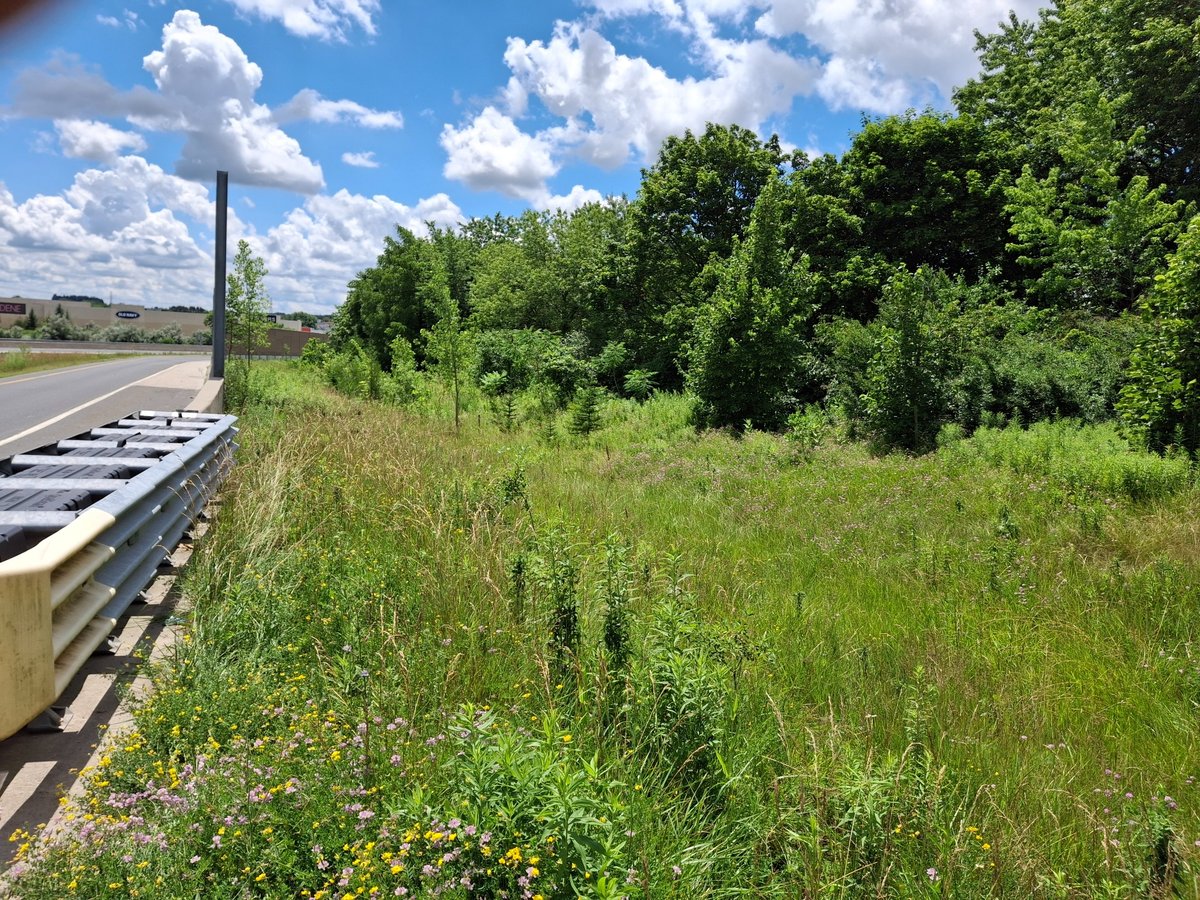
Before Grazing
Before the herd arrived, portions of the site contained tall grasses, dense herbaceous vegetation and developing woody growth.
The sound wall and surrounding trees created a long, narrow corridor where vegetation had established at several heights and densities.
Before & After
The Sound Wall Corridor
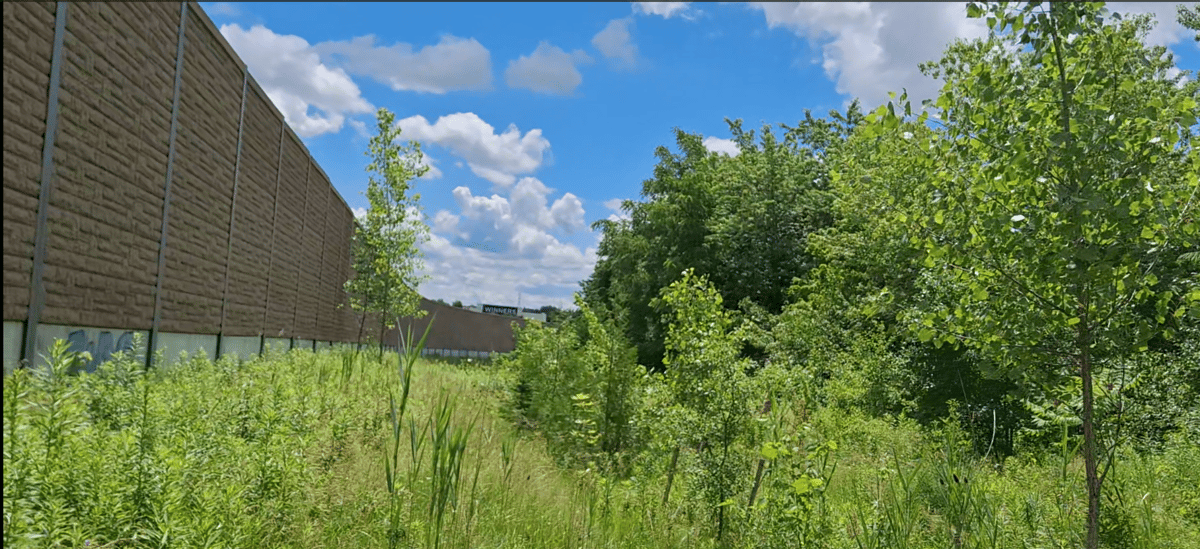 Before Grazing
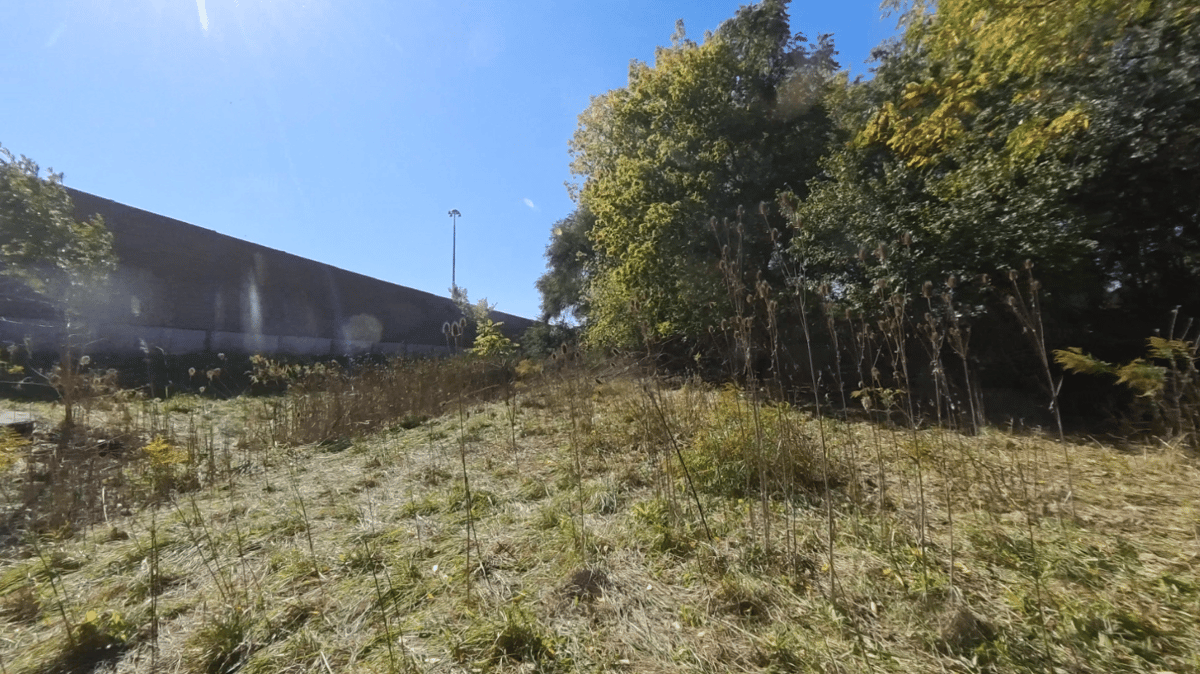 After Grazing
The grazing treatment substantially opened the corridor, reduced standing vegetation and improved visibility through the site while retaining established trees and larger vegetation designated to remain.
Watch the Transformation
Photographs capture individual moments, but the before-and-after videos provide a broader view of site conditions and the change achieved through prescribed grazing.
Before Prescribed Grazing
After Prescribed Grazing
How the Herd Worked
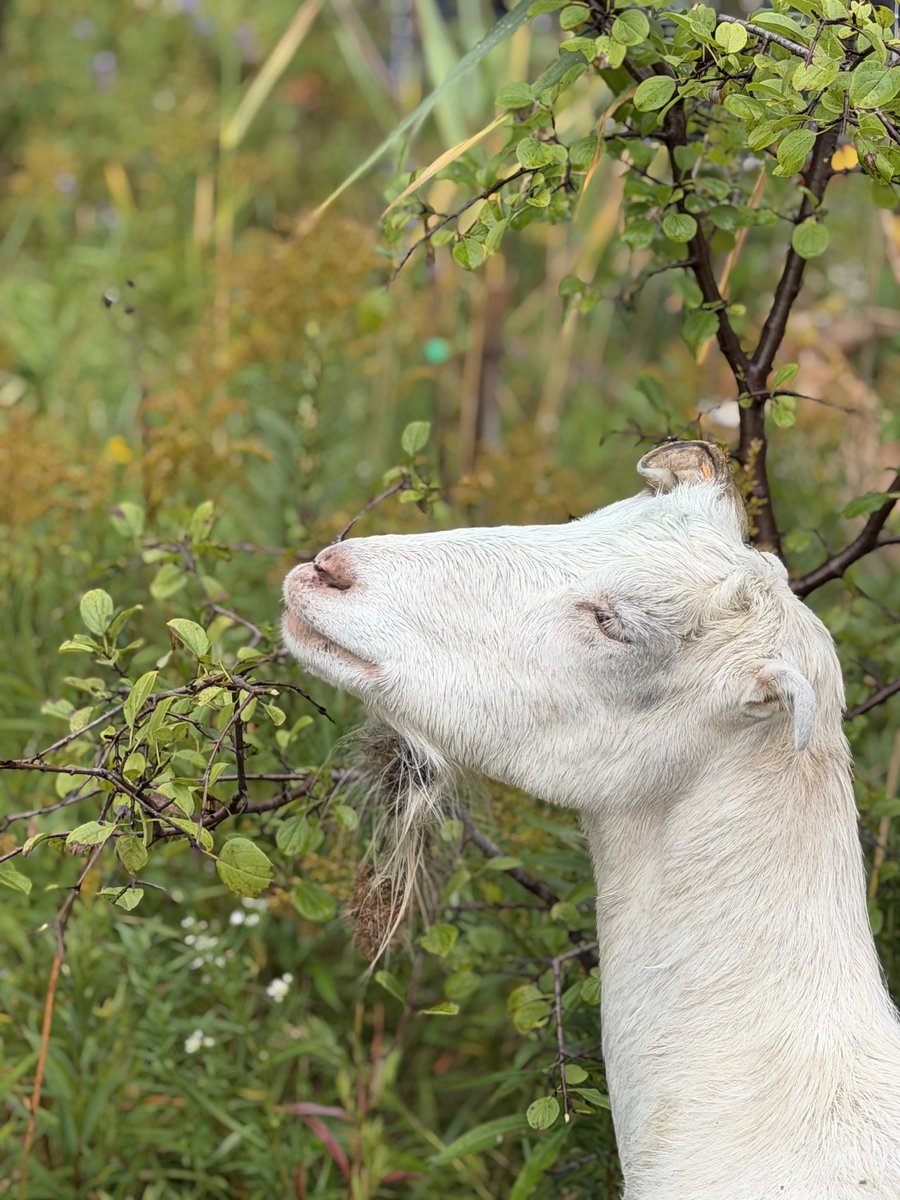
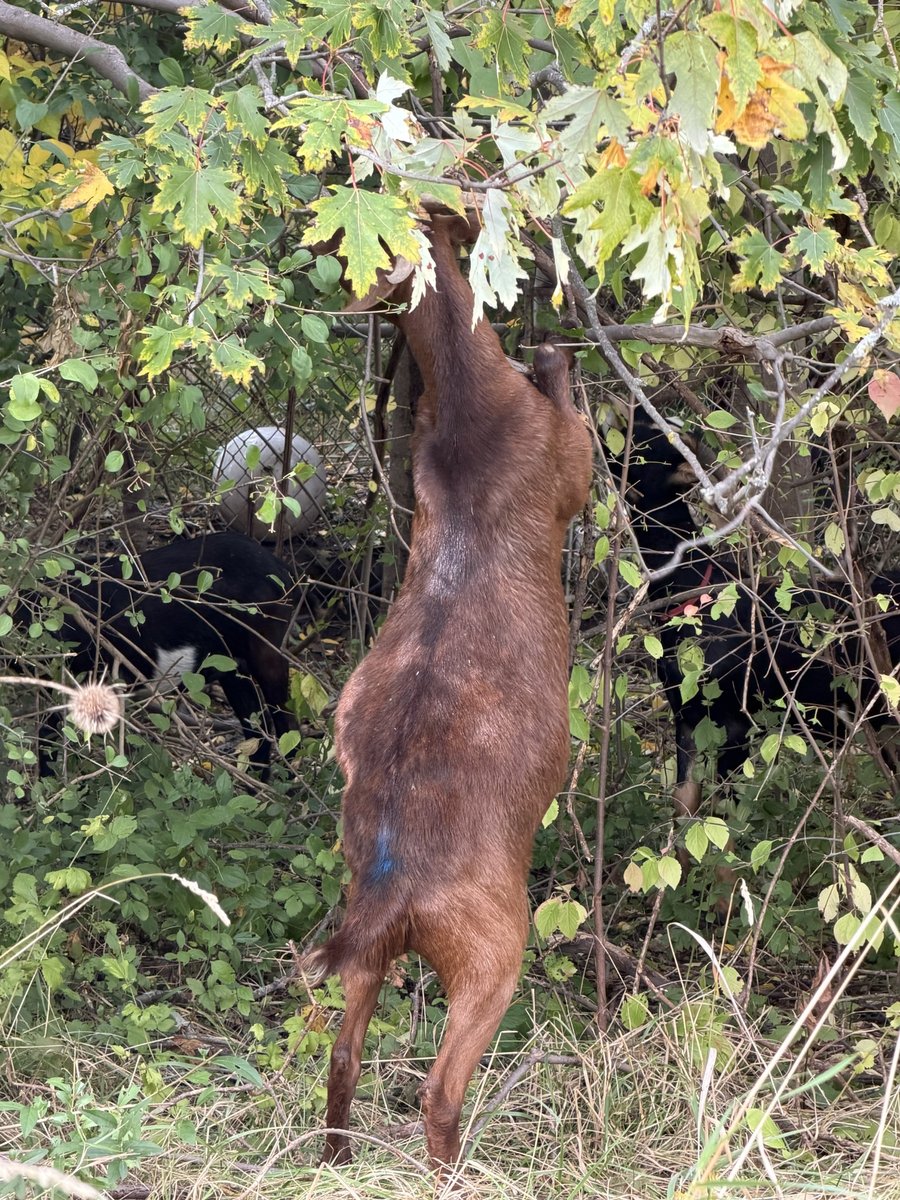
The goats did more than graze grasses at ground level.
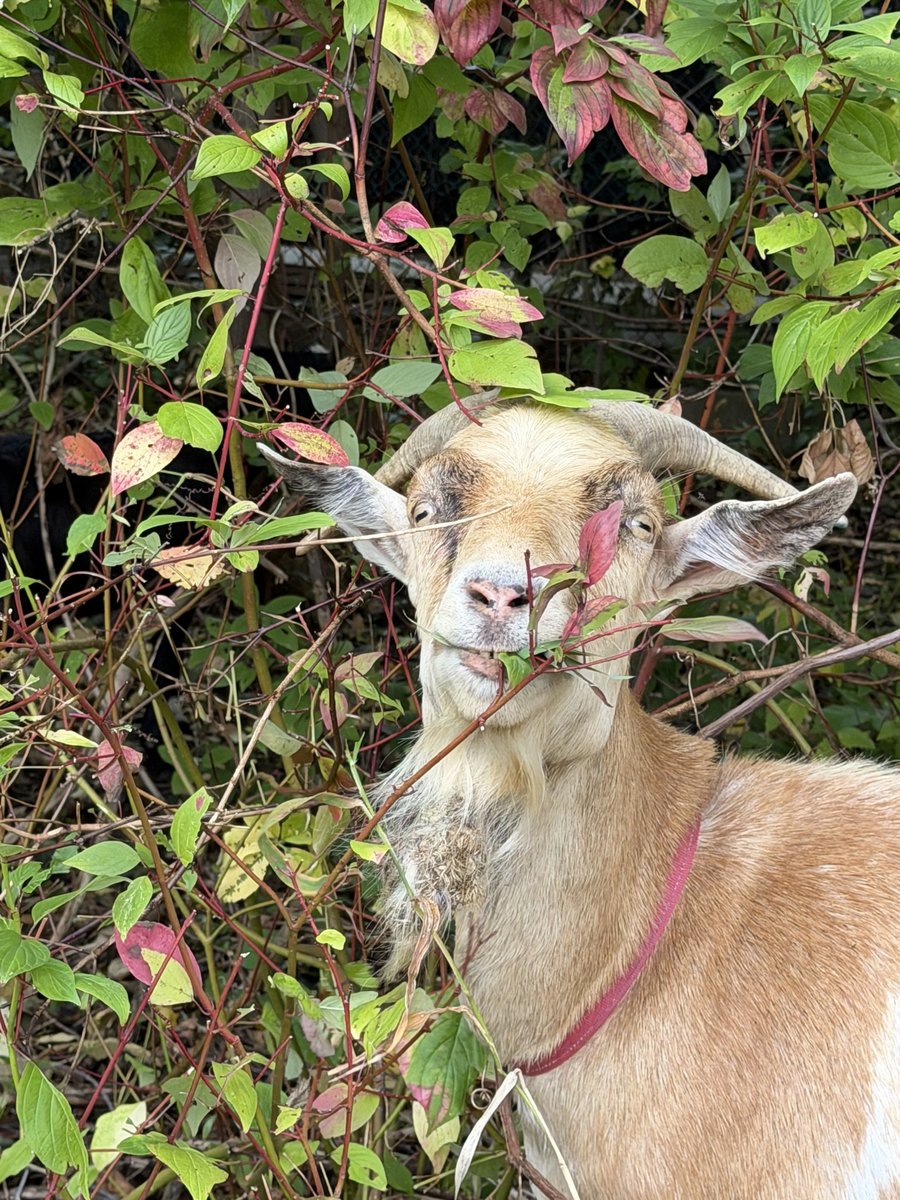
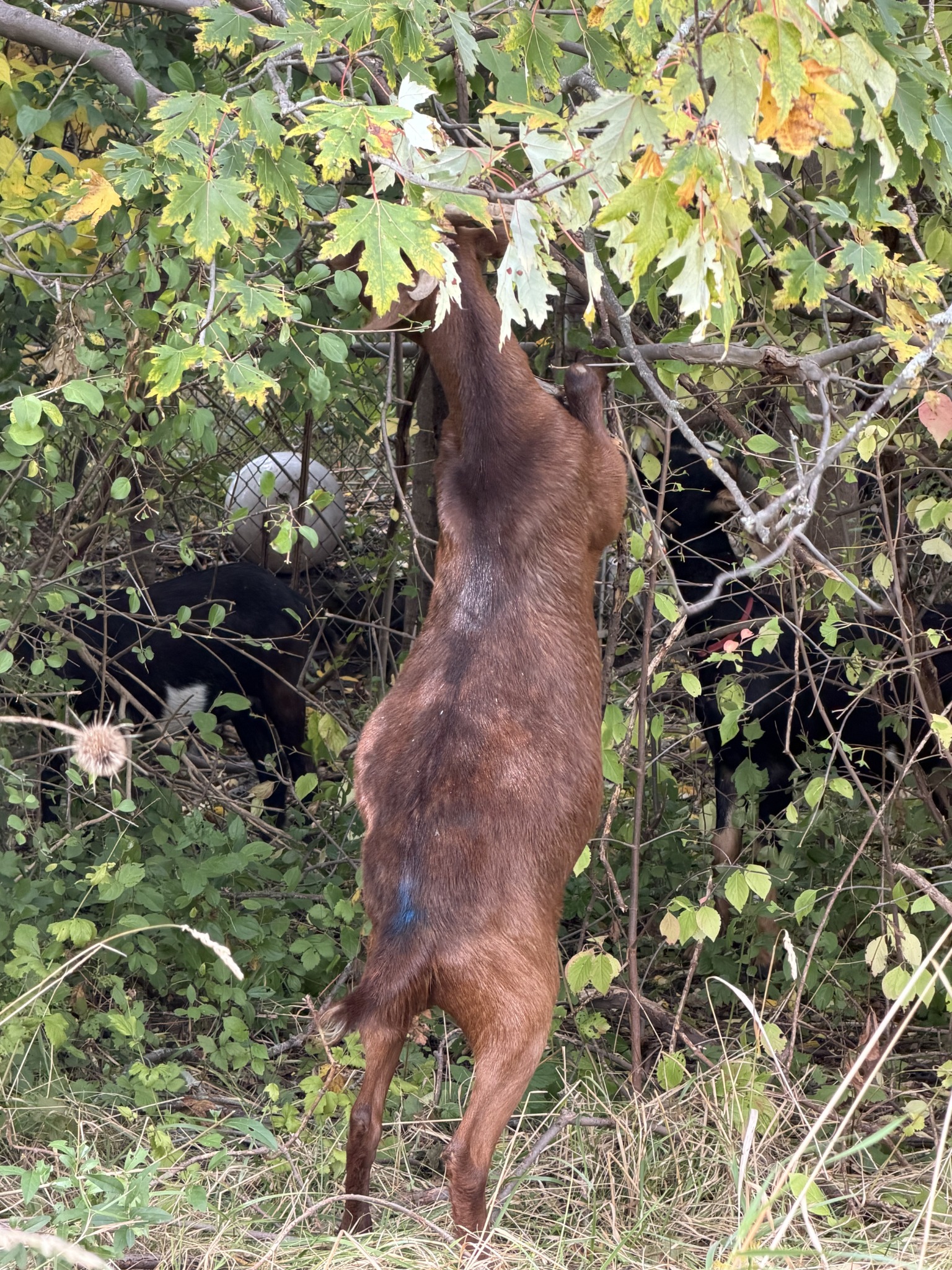
Throughout the project, the herd browsed leaves, stems and woody vegetation at multiple heights. They moved into dense growth, reached vegetation beneath trees and worked areas that would be awkward for conventional mowing equipment.
That browsing behaviour is one of the primary advantages of goats on sites where vegetation extends beyond a simple grass layer.
Managed as a Herd
Prescribed grazing is not simply releasing goats onto a property.
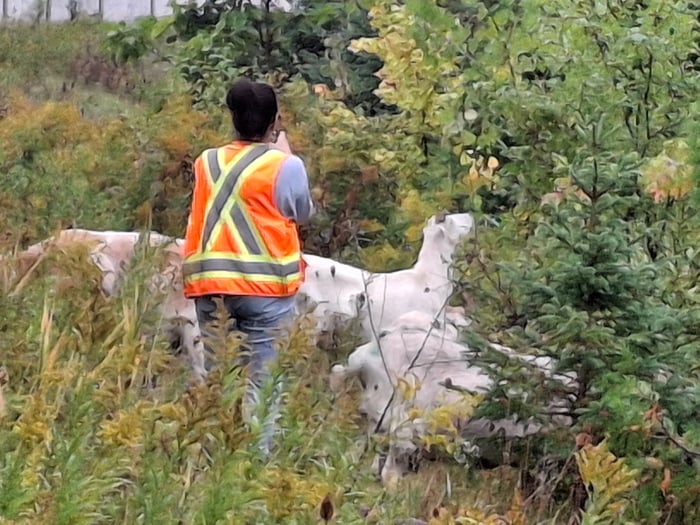
The herd was managed through defined treatment areas using temporary fencing, regular monitoring and active Eco-Shepherd oversight. Grazing pressure and herd movement were adjusted according to vegetation conditions and progress on site.
This allowed the goats to move on as sections reached the desired level of treatment rather than following a fixed mowing-style schedule.
Working Through Dense Brush
One of the strengths of prescribed grazing is the herd's ability to work collectively through complex vegetation.
At Highway 7/8, goats moved directly into woody and tangled growth, browsing leaves and accessible stems while progressively opening the treatment area.
Community
Community Along the Corridor
The Highway 7/8 project also created an unexpected connection with nearby residents.
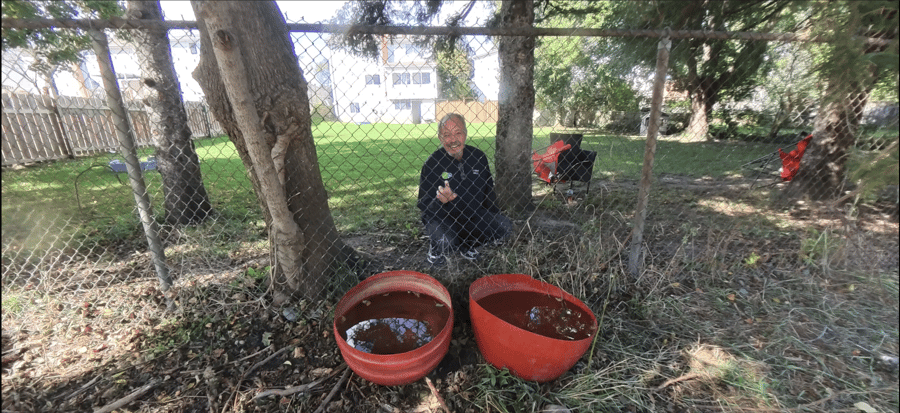
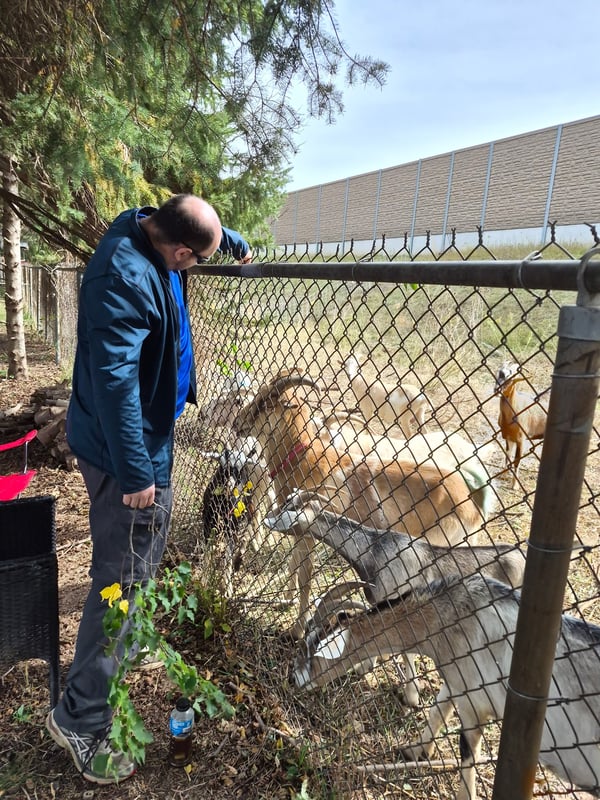
One neighbour, Ken, took a particular interest in the herd during the project. He regularly checked in on the goats, sent us photographs and updates when our team was away from the site, and helped make sure fresh water was available to the herd.
His support became a small but meaningful part of the project and demonstrated the kind of community connection that can develop around prescribed grazing.
The Result
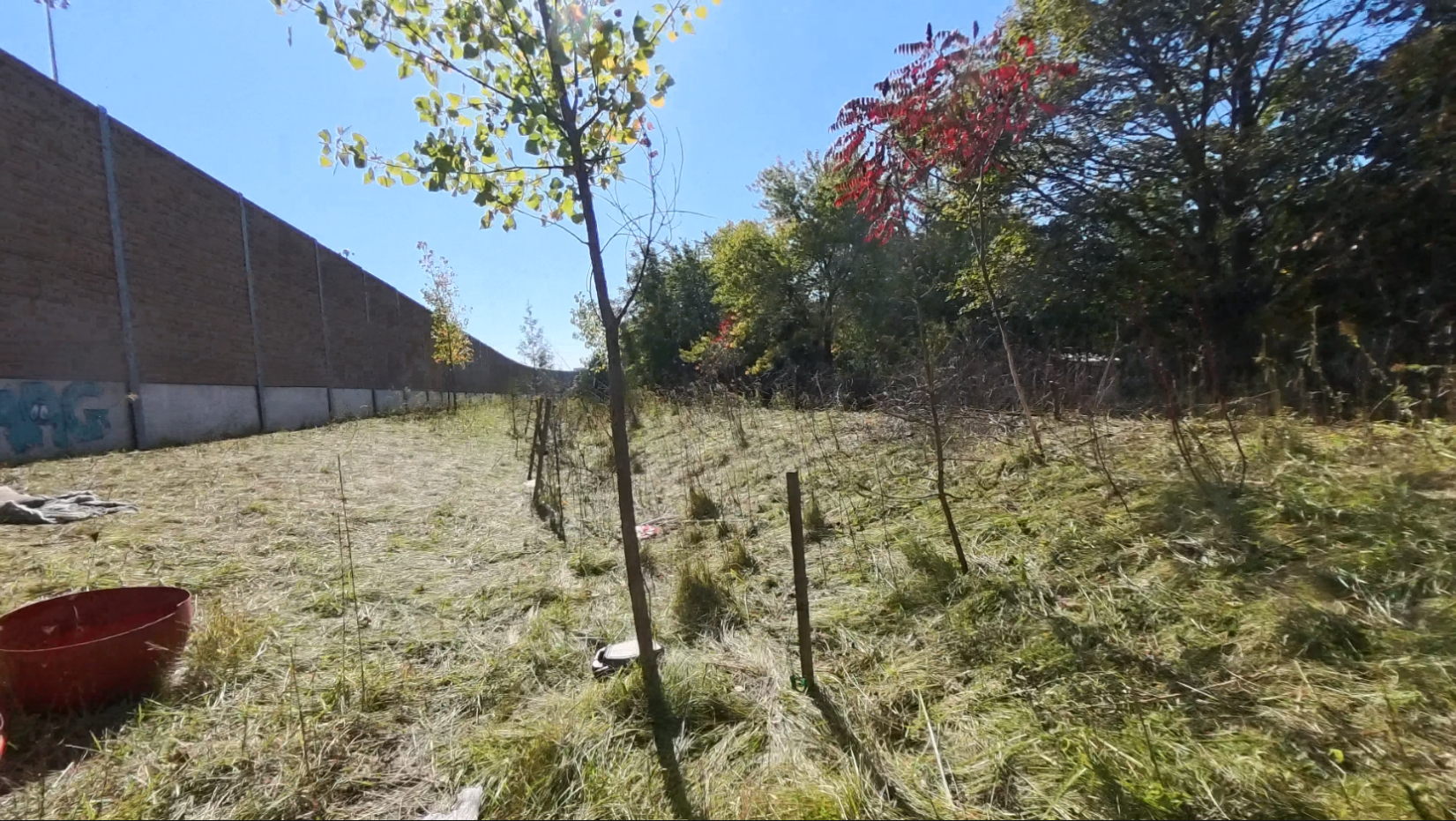
By the completion of the grazing treatment, much of the standing herbaceous vegetation had been reduced and the site had become considerably more open.
The project demonstrates how prescribed grazing can provide another vegetation-management tool for transportation corridors, sound walls and other infrastructure sites where terrain, access or vegetation structure can make conventional approaches challenging.
The objective is not to make a site look like a manicured lawn. Prescribed grazing is a vegetation-management treatment that reduces biomass, suppresses targeted growth and changes vegetation structure through controlled browsing.
Could Prescribed Grazing Work on Your Site?
Goats in the City provides managed prescribed grazing for municipalities, conservation organizations, infrastructure operators and private landowners across Ontario.