Project Overview
A closer look at this project
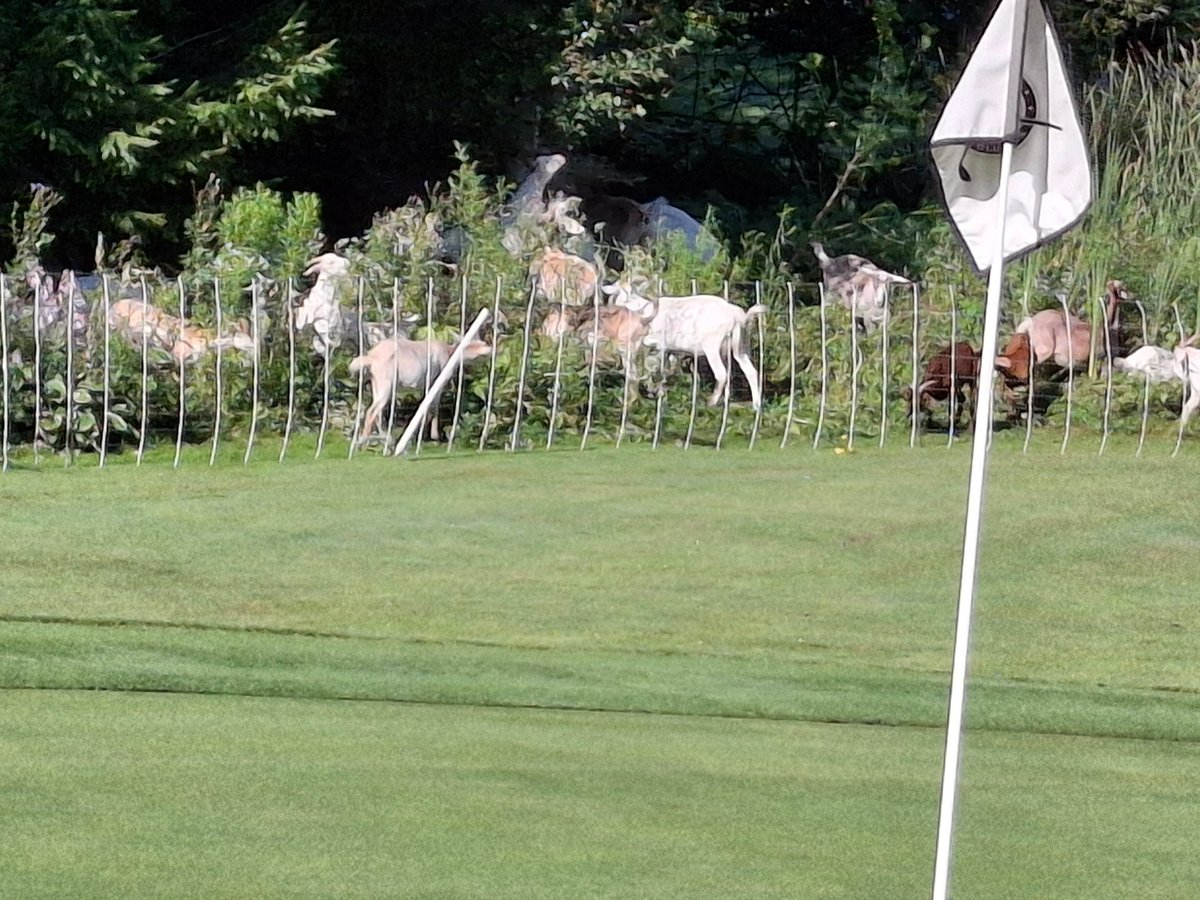
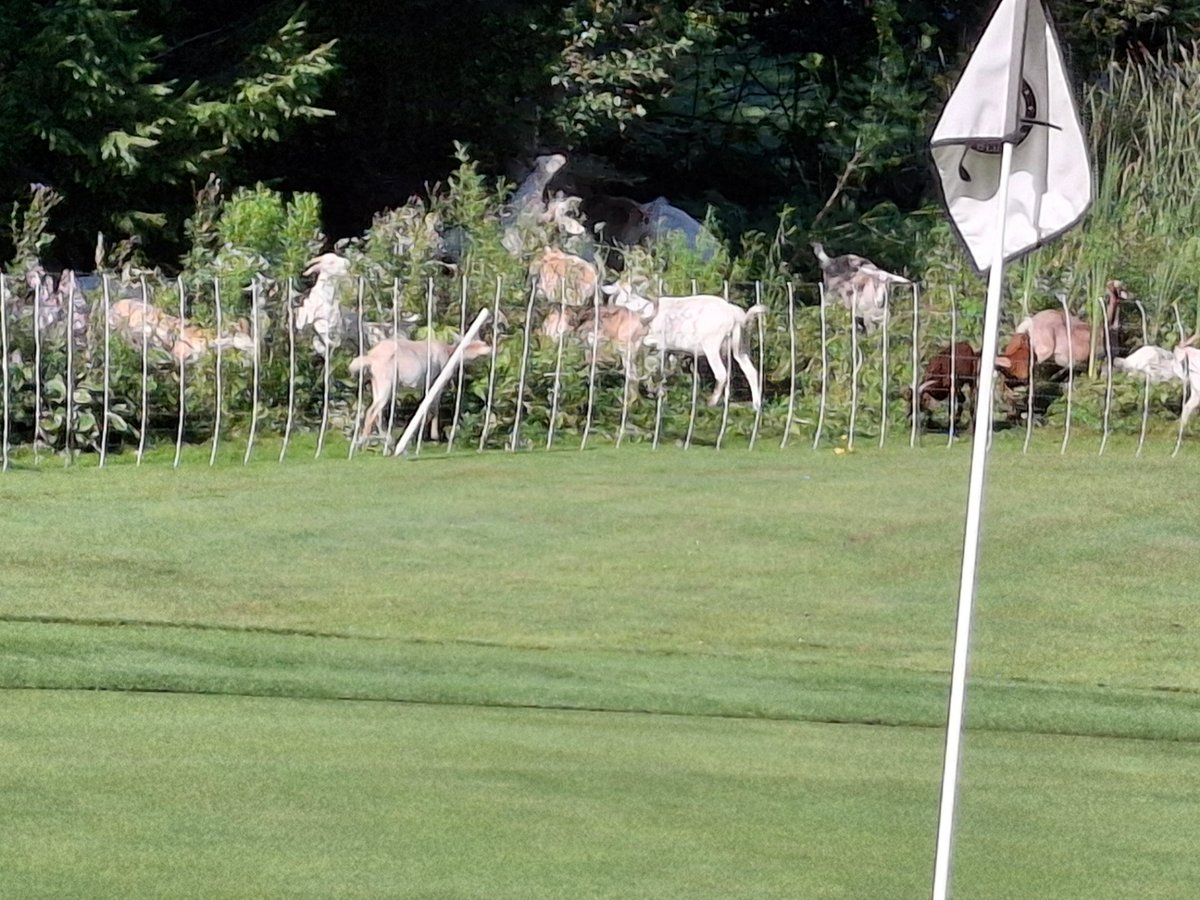
Overgrown shoreline and woodland-edge vegetation was affecting views, access, and the appearance of the course in areas that were difficult to manage with conventional equipment. The Eco-Herd provided a quieter, low-impact way to manage vegetation along water edges, slopes, and naturalized areas while improving visibility, helping golfers find balls in the rough, and becoming a memorable part of the course experience.
The Challenge
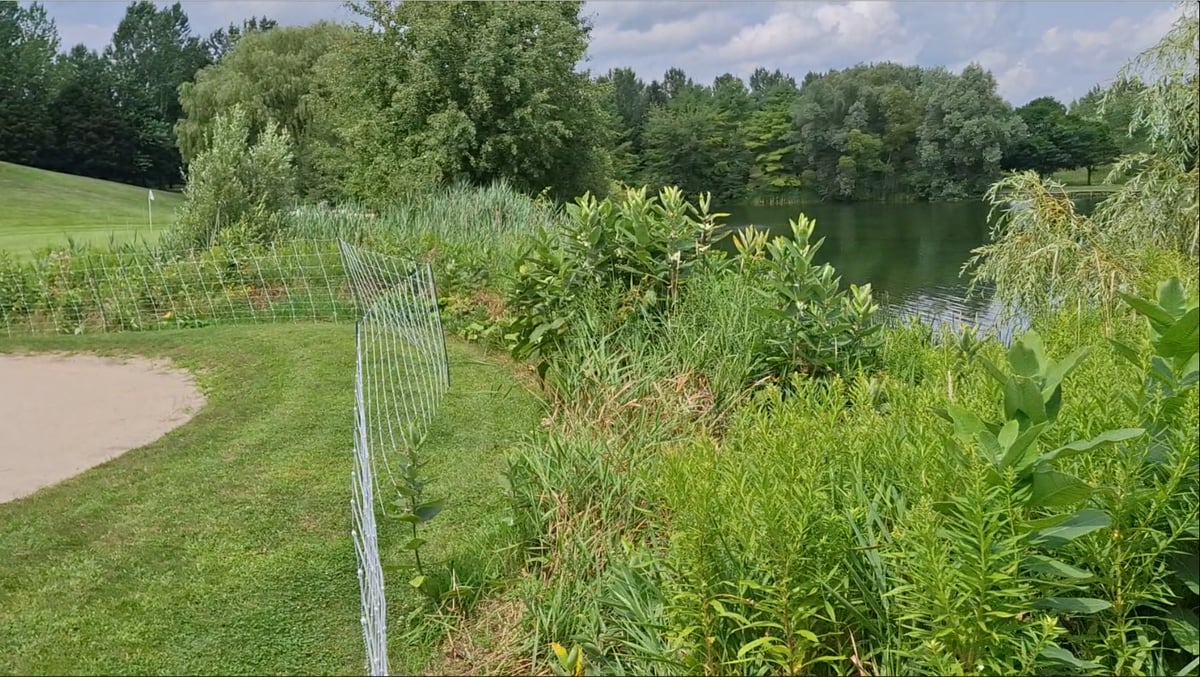
Shoreline and woodland-edge areas had grown in to the point of affecting sightlines and playability, but the terrain was uneven, close to water, and awkward for mechanical brushing — all while play continued.
- Uneven shoreline terrain difficult for machinery
- Water-adjacent areas where chemical treatment was unsuitable
- Naturalized plantings to be preserved
- Ongoing play requiring minimal disruption
Why Goats Work on Golf Courses
Golf courses have areas that conventional equipment simply cannot reach safely or quietly. The Eco-Herd works on slopes, shorelines, and naturalized rough without machinery, chemicals, or disruption to play.
Access difficult terrain
Steep banks, shorelines, and wet edges are grazed safely where mowers and brush equipment cannot operate.
No chemicals near water
Vegetation beside ponds and creeks is managed without herbicides, protecting water quality and aquatic habitat.
Quiet, low-impact operation
No engines or blades means play continues nearby with almost no noise, dust, or interruption.
A memorable member experience
The herd becomes a talking point for members and guests and a visible sign of the course's environmental commitment.
The Grazing Approach
The herd worked in staged fenced grazing areas along the shoreline and woodland edge, opening sightlines while leaving naturalized native plantings largely intact. Grazing was scheduled around play so the course stayed open throughout.
- Staged fenced grazing areas along shoreline and woodland edge
- Grazing scheduled around daily play
- Quiet operation with no machinery near the water
- Naturalized plantings deliberately left in place
Before and After
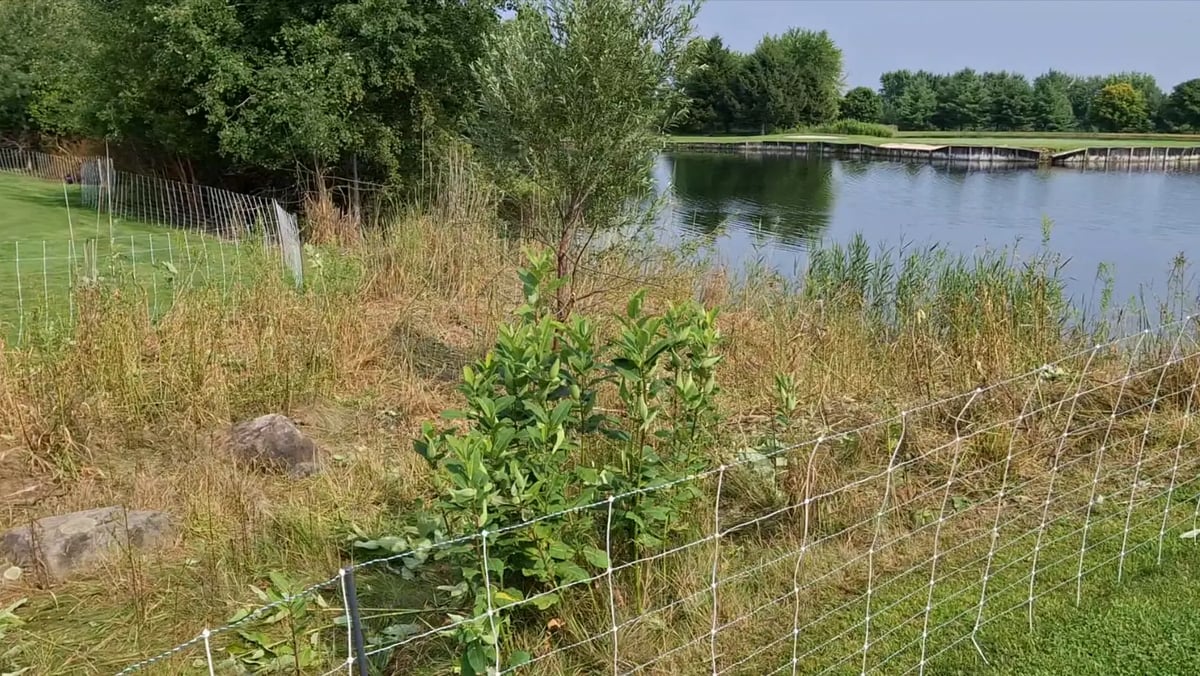
Managed grazing reduced accessible shoreline vegetation, reopened views of the water, and improved access along a difficult-to-maintain area of the course.
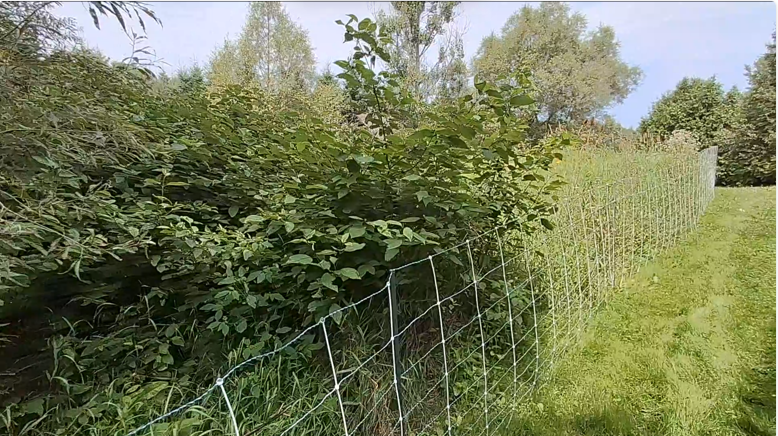
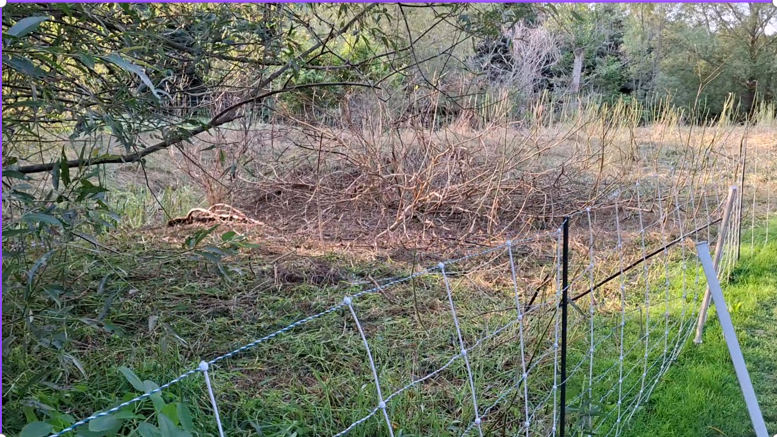
Woodland-Edge Results
Along the woodland edge, browsing opened up the understory and restored sightlines into the treeline while leaving the canopy and naturalized plantings intact.
Results
Sightlines and access along the shoreline and woodland edge were restored without machinery or chemicals, and the herd itself became a memorable amenity for members and visitors.
Reduced fuel use and mechanical disturbance
Naturalized plantings preserved
Improved visibility and playability
Distinctive on-course amenity for members and visitors
See the Eco-Herd at Work
Project Gallery